
The coast of Israel runs almost straight for most of its length, a long sandy line with no natural bay worth the name between Jaffa and Haifa. That is what makes Caesarea remarkable. In the last decades before the common era, Herod the Great decided that his kingdom needed a deep-water port on the Mediterranean, and since the shore would not provide one, his engineers built it. They poured concrete that set underwater, sank breakwaters into the open sea and raised a city around the new harbour, with a palace, a theatre, a temple and broad streets laid out on a grid.
Today the core of that city lies inside Caesarea National Park, on the shore roughly halfway between Tel Aviv and Haifa. It is one of the easiest ancient sites in the country to visit as a half day: flat, compact, and close to the main coast road. You walk among Roman, Byzantine, early Islamic and Crusader remains, with the sea always within a few steps.
The shape of a half day
Most people enter from the south, near the theatre, and walk north through the site towards the harbour and the Crusader walls. Allow two to three hours for the park itself, then add an hour for the aqueduct beach a short drive or a longer walk to the north. Morning light is soft on the stone, and the site is quieter before mid-morning groups arrive. In summer the sun bounces off pale limestone and sand, so a late afternoon visit can be kinder, ending with the sun dropping into the sea behind the arches.
- Theatre and the promontory palace first, while the air is cool.
- Hippodrome and the bathhouse remains on the walk north.
- The harbour area and the Crusader moat and gate.
- A short drive to the aqueduct for a swim or a sunset.
Opening hours shorten in winter and on Fridays and holiday eves, and entrance fees change from year to year, so check before you go. A combined pass covering several national parks can make sense if you plan more days at sites such as Masada or Avdat.
The theatre and the palace on the point
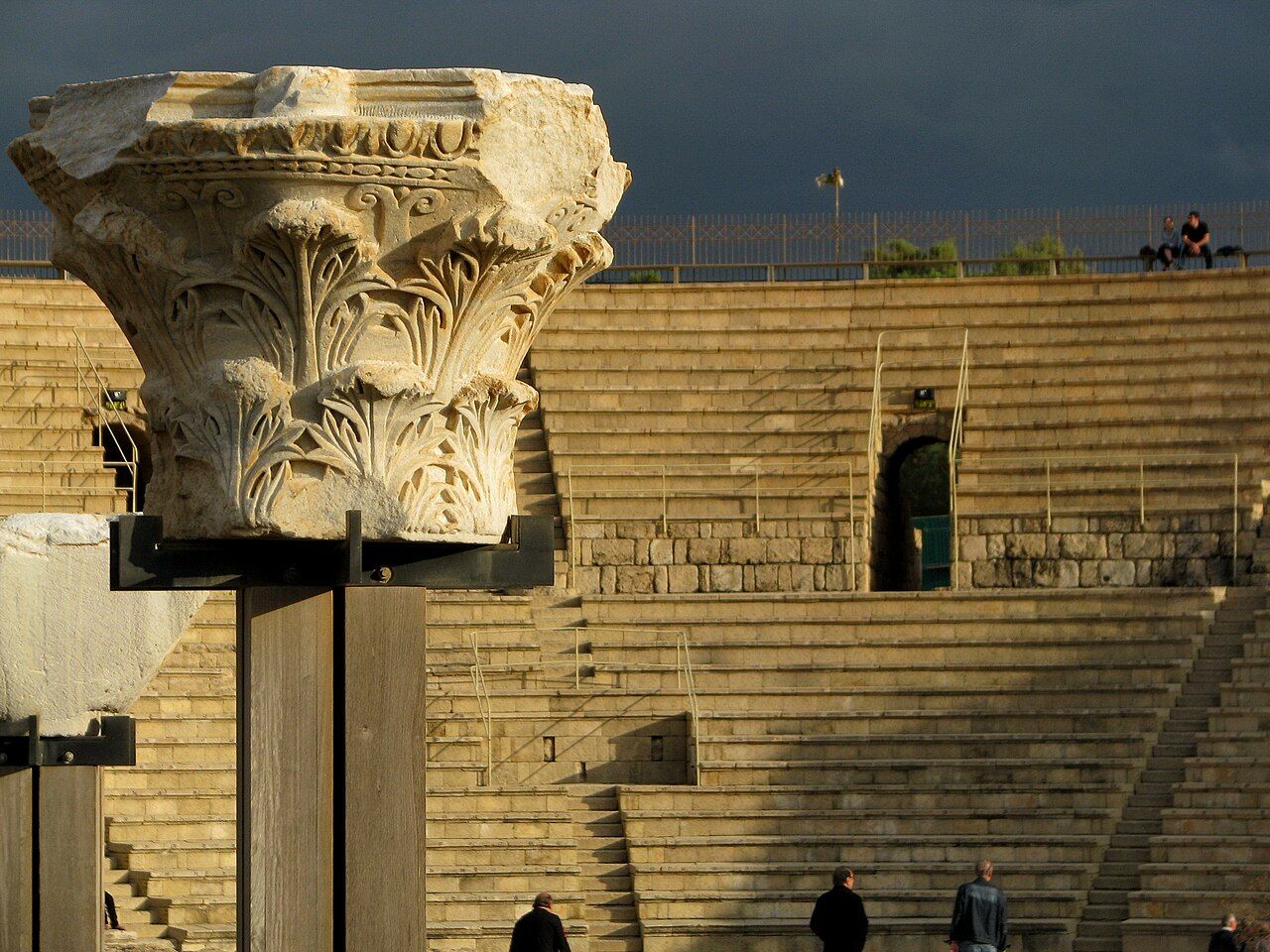
The Roman theatre faces the sea from the southern end of the park. Much of the seating you sit on today has been restored, and the theatre is still used for summer concerts, which is a good reminder that these were working buildings rather than monuments. Near the entrance stands a copy of an inscription found here naming Pontius Pilate, the Roman prefect of Judaea; the original is kept in a museum in Jerusalem.
Just north of the theatre, a rocky promontory pushes into the water. This is where Herod built a palace, with a pool cut into the rock at its lower level, now often lapped by waves. Stand at the edge and you see why he chose it: open sea on three sides, the harbour to the north, the city at your back.
The hippodrome and the harbour
Running along the shore beyond the palace is a long, narrow arena where chariot races and other spectacles were held. Its seating and turning post have been partly reconstructed, and its length is easier to grasp when you walk it end to end than from any plan. Look along it towards the north and the line of the old harbour opens up.
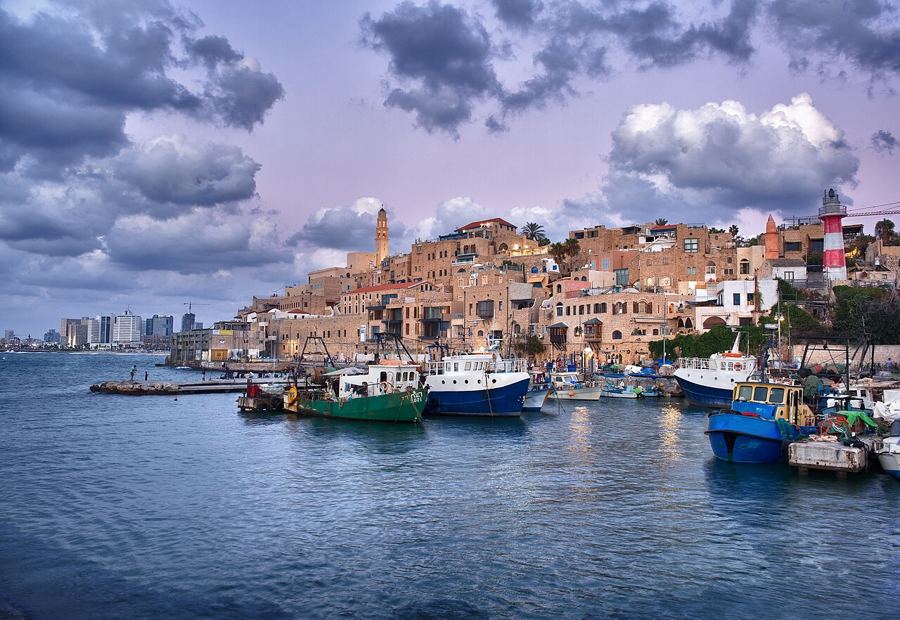 Another day · CoastUp the hill to the old port
Most of Herod's harbour is now under water. Earthquakes and the settling of the seabed broke and sank the great breakwaters over the centuries, and what you see on land is the inner part of the port and later buildings raised on top. Divers explore the submerged remains on marked underwater routes, but from the shore you can still trace the curve of the old basin, the quays, and the rocks that mark where the outer moles once stood.
Later rulers kept using the site. In the Crusader period a smaller walled town stood here, and its sloping walls, deep dry moat and vaulted gate are among the most complete pieces of the park. Walking across the bridge and through the gate gives you a clear sense of how the town contracted over time, from a Roman capital to a fortified harbour of a few streets.
The aqueduct beach
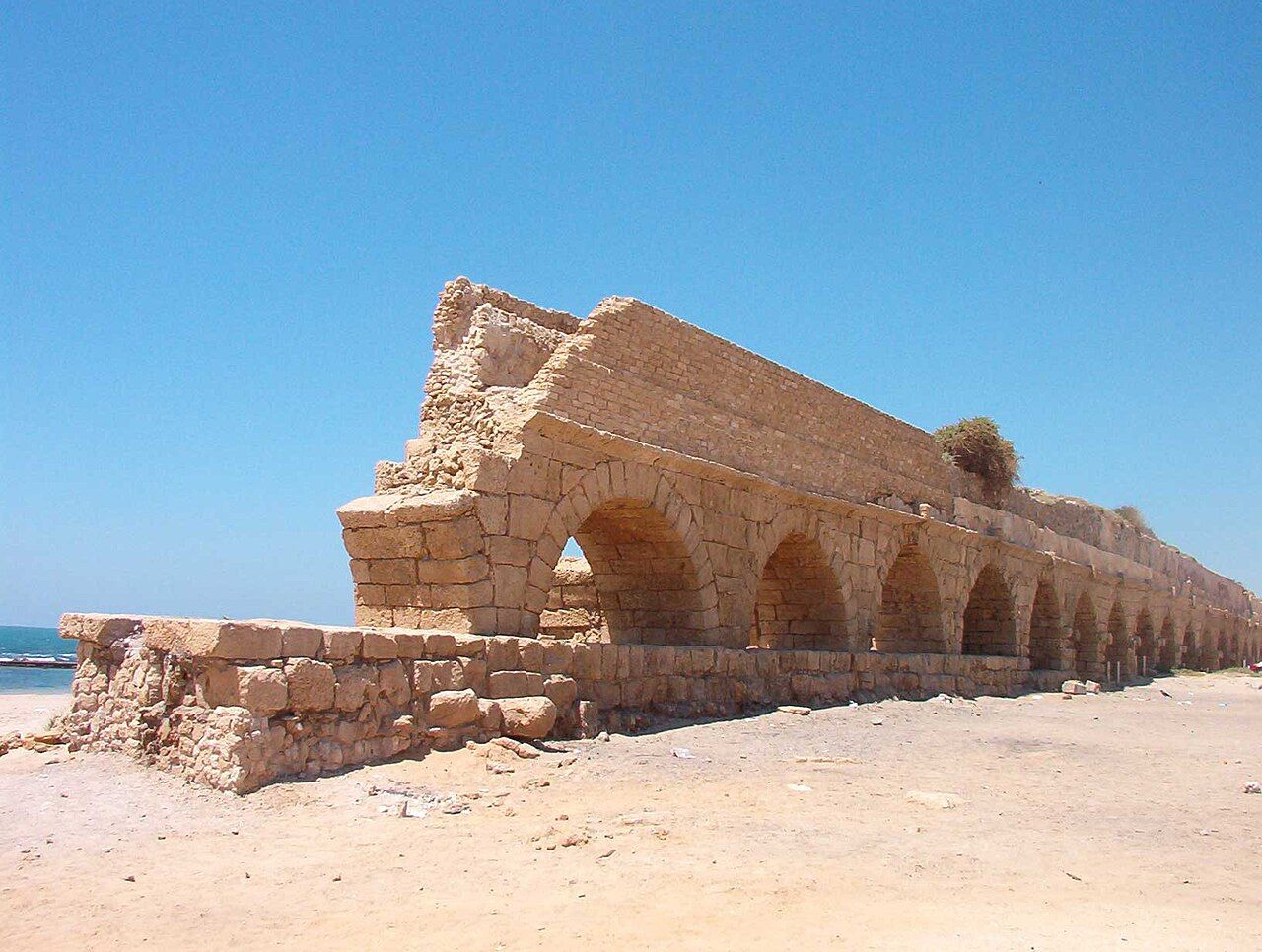
A short way north of the park, outside its fence, a long row of stone arches runs along the dunes beside the sea. This is the high-level aqueduct that brought fresh water to Caesarea from springs at the foot of the Carmel range, carried on arches for the last stretch along the coast. Sand has buried much of it, and in places the arches rise straight out of the beach, so you can sit in their shade with your feet in the sand.
The beach here is open and free to walk, and many people swim. Lifeguard cover on Israeli beaches runs only in season and only at marked stretches, so swim where a lifeguard station is working and treat the currents along this coast with respect. Rip currents form along sandbars and are not always obvious from the shore.
Getting there and moving on
By car, Caesarea sits just off the coast road, and the drive from Tel Aviv usually takes about an hour depending on traffic. Parking is available at the park and near the aqueduct. Without a car, trains on the coastal line stop at stations within a short taxi or bus ride of the site; see the notes on trains and buses for how the network works.
The coast road makes it easy to fold Caesarea into a longer day. Head north and you reach Haifa and Acre in well under an hour, enough time to see the terraced gardens and the old sea walls before dark. Head south and you are back in Tel Aviv for an evening on the promenade.
Heat, shade and timing
There is little shade inside the park apart from a few trees, the vaults of the Crusader town and whatever building you can duck into. From June to September the midday sun is hard on this stone, and a visit at that hour turns into a slog. Wear a hat, carry water and refill wherever taps are offered. Comfortable shoes help on the uneven paving; sandals can wait for the beach.
Spring is the best season, when the dunes are green at the edges and the air is clear enough to see the Carmel ridge to the north. Autumn runs a close second, with warm sea water lasting into November. Winter brings rough seas and occasional storms, which can be dramatic at the harbour, but check the weather and stay well back from waves breaking over the rocks.