
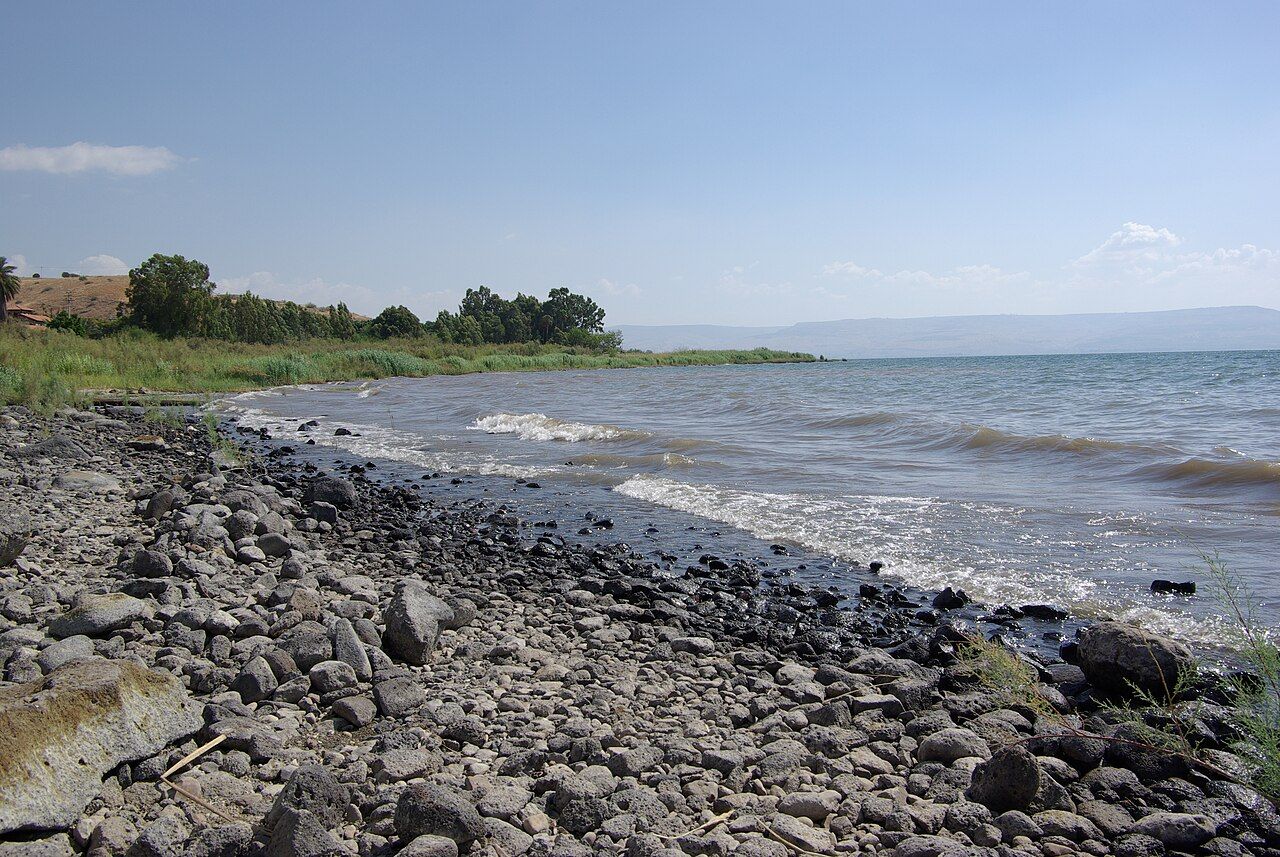
The Sea of Galilee is a lake, not a sea: a body of fresh water about twenty kilometres from north to south, lying more than two hundred metres below sea level in a deep trough of the Jordan Rift. Hills rise on every side, the Golan heights to the east, the Galilee hills to the west, and on clear winter days the snow of Mount Hermon shows far to the north. In Hebrew it is called Kinneret.
For Christians, the north shore is where much of Jesus's ministry took place in the Gospel accounts, and a string of churches marks the traditional sites. For Jews, Tiberias on the western shore was a centre of learning in late antiquity and is counted as one of four holy cities. A day around the lake lets you see both, along with plenty of quiet shoreline in between.
Capernaum
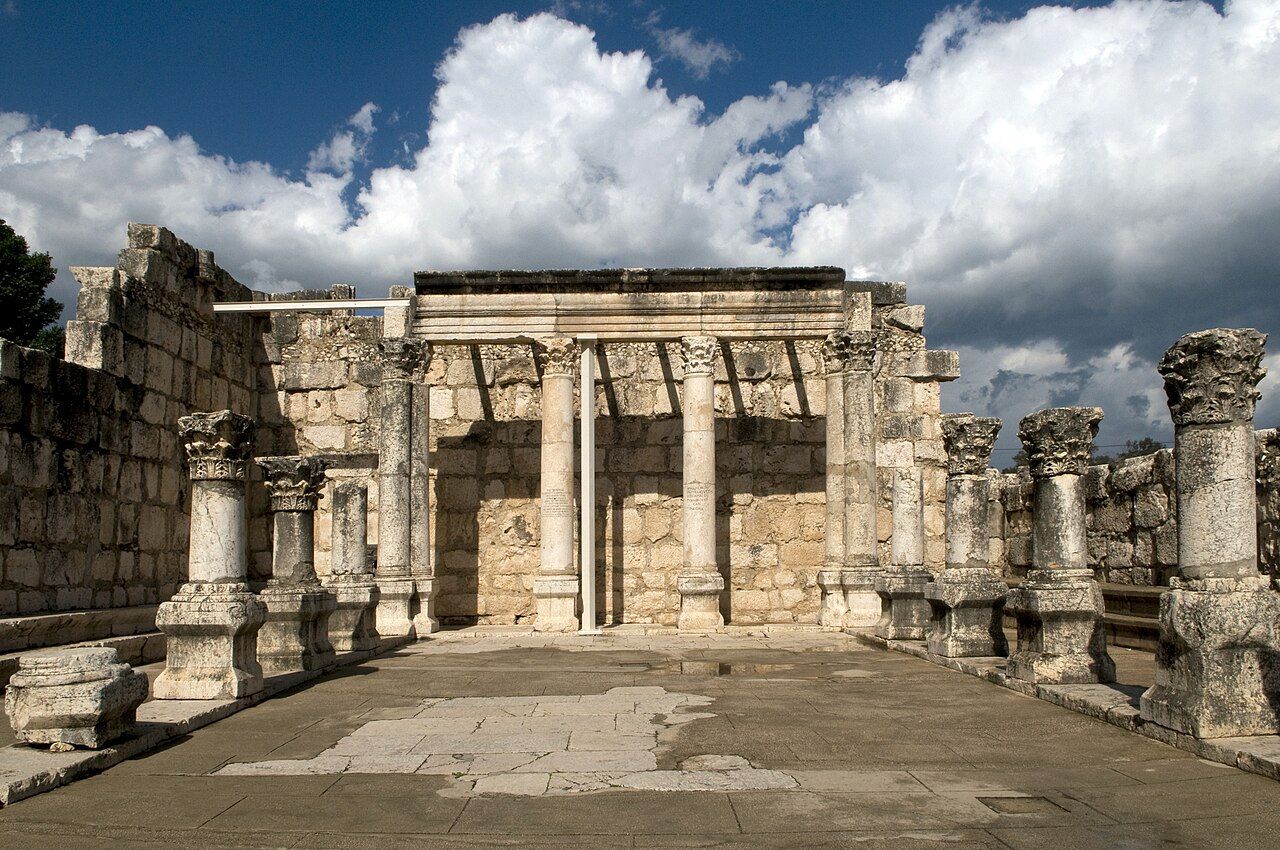
Start at Capernaum, near the north-western corner of the lake. This was a fishing village in the first century, and the Gospels describe it as a base for Jesus and the home of Peter. Excavations have uncovered streets of houses built from the local black basalt, and above them stand the remains of a large synagogue of pale limestone, built centuries later on older foundations.
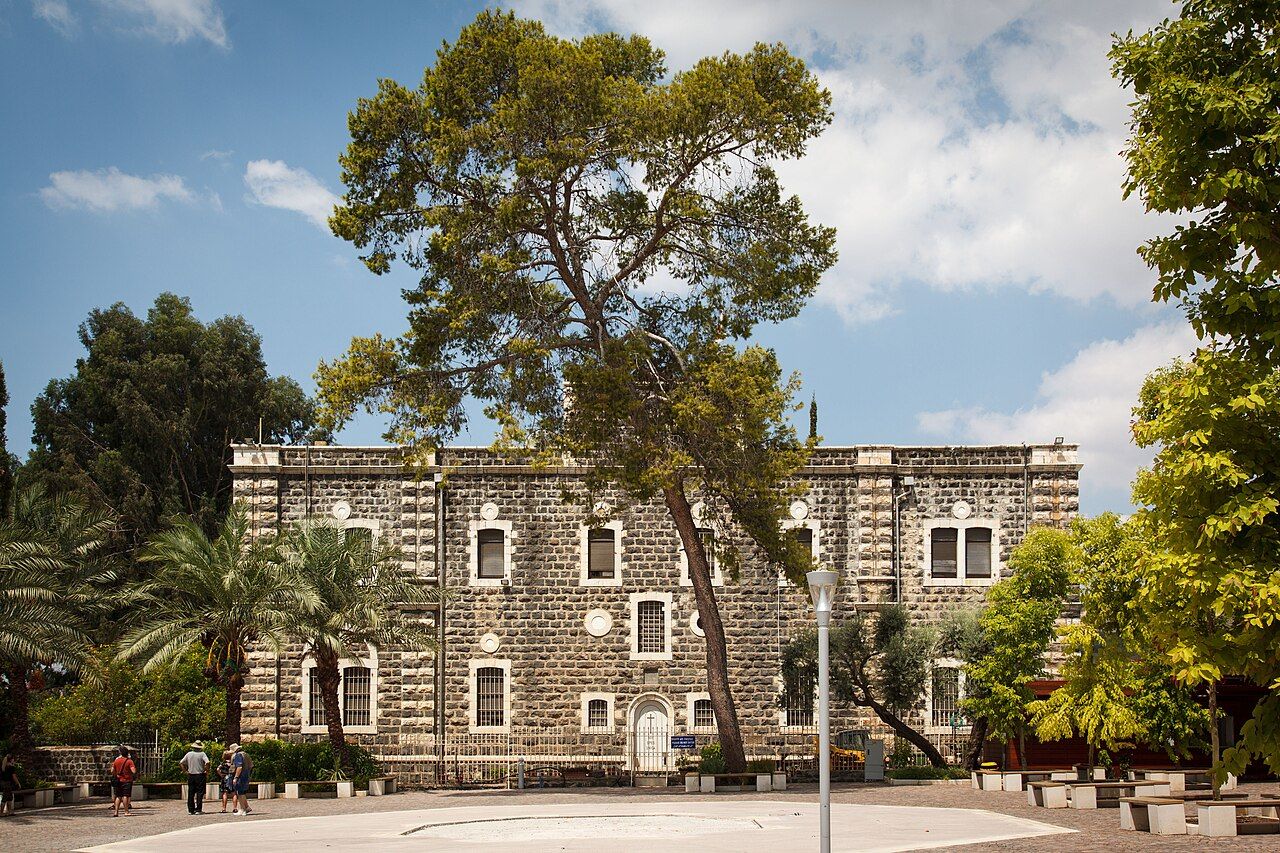
Next to the synagogue, a modern church stands raised on pillars above the remains of a house that early Christians venerated as Peter's. The site is cared for by the Franciscans, and their monastery building and garden frame the entrance. A short way east along the shore, a separate Greek Orthodox church with red domes marks another part of the ancient village.
Take a moment with the synagogue itself. Its white stone was brought from some distance, and it stands out sharply against the dark basalt houses around it. Carved lintels and capitals lie in the courtyard, decorated with plants, stars and other motifs.
Dress modestly here and at all the lakeside churches: shoulders and knees covered, for everyone. Opening hours are set by the religious communities, with breaks at midday and changes on Sundays and feast days, so check before you go.
Tabgha and the Mount of Beatitudes
A few minutes' drive west, Tabgha is the traditional place of the feeding of the multitude. The Church of the Multiplication is a calm, plain building raised over the remains of a Byzantine church, and its floor holds old mosaics of birds and water plants. The best known shows a basket of loaves between two fish, just in front of the altar.
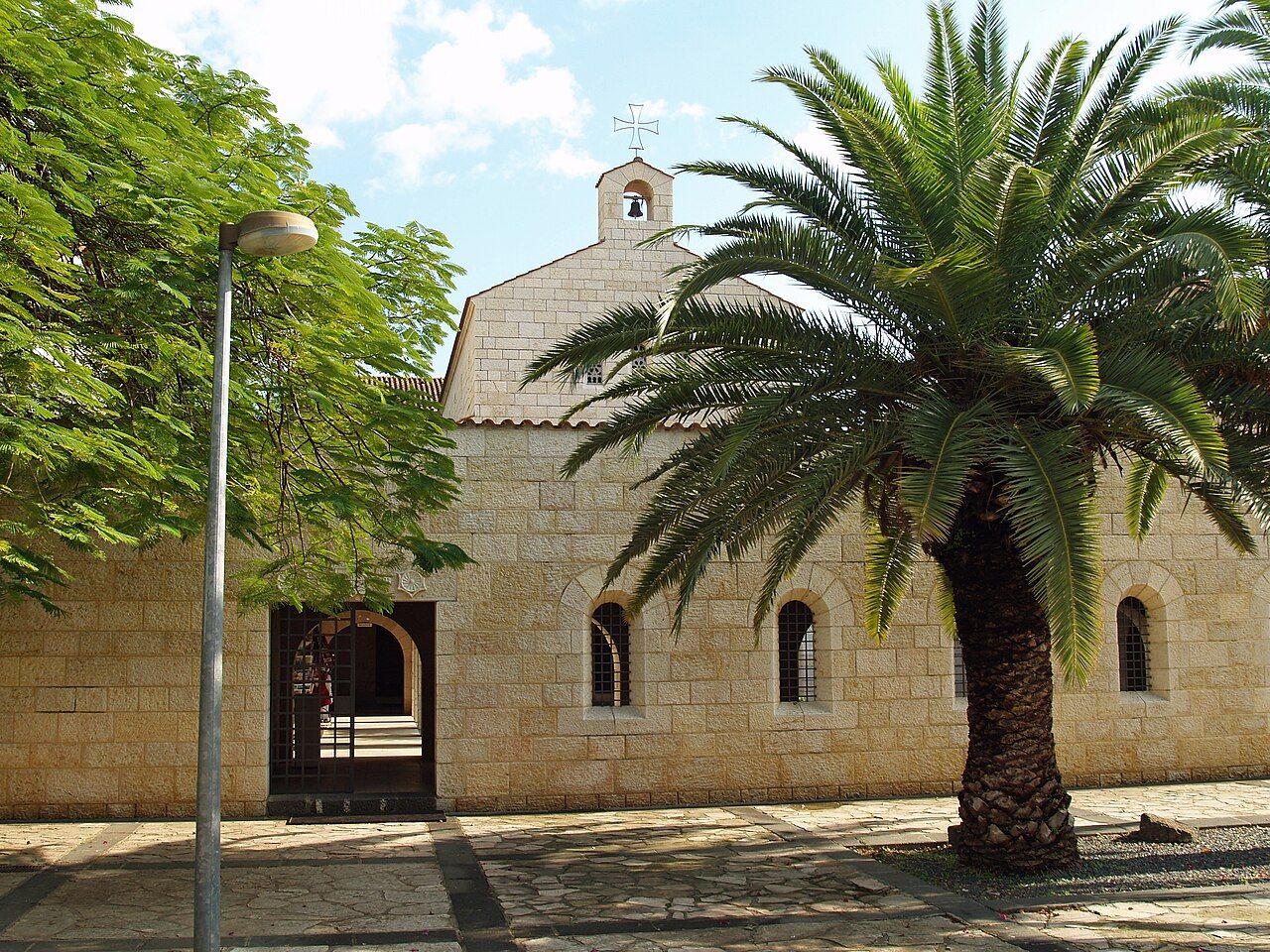
Close by, on the water's edge, a small church of dark stone marks the place where tradition says the risen Jesus appeared to Peter. Steps lead down to the shore, and you can stand on the flat rocks at the waterline.
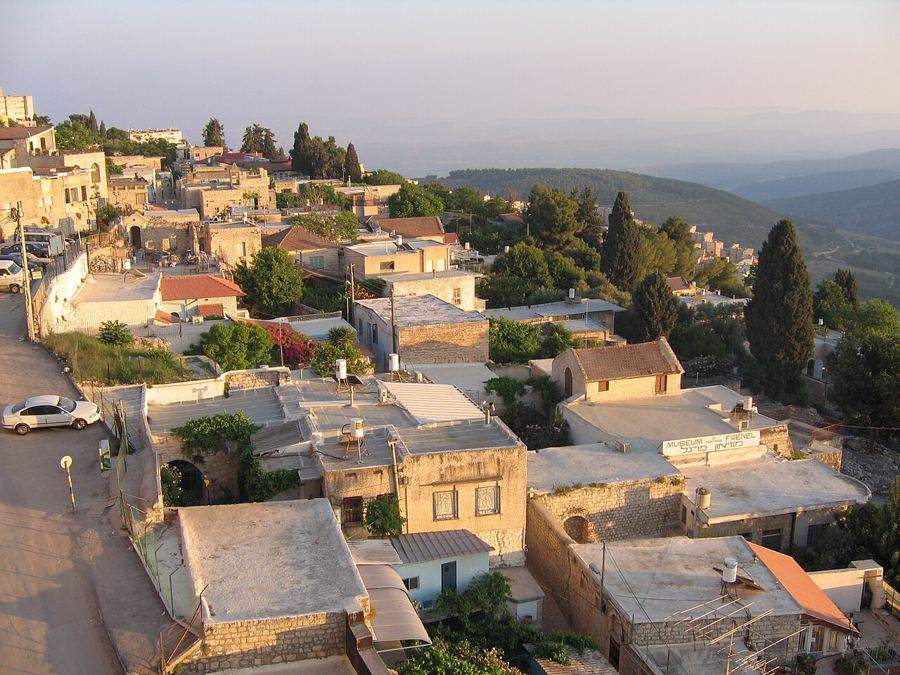 Another day · NorthNazareth and the hilltop town of Tsfat
Above Tabgha, on the slope of a hill looking over the lake, the Church of the Beatitudes recalls the Sermon on the Mount. The octagonal church was built in the twentieth century, with a colonnade that gives shaded views over the water, and its gardens are kept quiet for reflection. Even if you visit no other church on the lake, this view is worth the short climb by road. Groups often hold services in the gardens, so keep voices low.
Tiberias and the western shore
Tiberias was founded in the first century by Herod Antipas and named for the emperor Tiberius. After the destruction of Jerusalem in 70 CE it grew into a major centre of Jewish life, and scholars here worked on the Mishnah and the Jerusalem Talmud, and on the system of vowel marks used in Hebrew Bibles. Tombs of revered sages, including Maimonides, draw pilgrims to the town today.
The modern town is busy and practical, with a lakeside promenade, fishing boats and old basalt walls showing between newer buildings. South of the centre, the national park at Hamat Tiberias holds the remains of an ancient synagogue with a mosaic floor that includes a zodiac wheel, near hot springs that have been used since Roman times.
North of Tiberias, at Ginosar on the shore, a museum displays the remains of a wooden fishing boat from around the first century, recovered from the mud of the lake during a drought in the 1980s. It gives a real sense of the craft that worked these waters.
A boat, a bike, or just the shore
Wooden boats take groups out on the lake from Tiberias and Ginosar, and on a calm day a half hour on the water is a good way to see the shape of the shoreline and the hills around it. Departures depend on numbers and weather, so ask at the jetties and check before you go.
Cycling around the lake is popular, and the full circuit is roughly sixty kilometres on mostly flat roads with some busy stretches. It is a full day in cool weather. In summer it is only sensible at first light. Shorter rides along the north shore between Capernaum and Tabgha are easier to fit in.
Swimming is common at public beaches around the lake, many with lifeguards in season. Water levels rise and fall with the rains, so a beach that is broad one year can be narrow the next. Wear footwear on rocky shores.
The lake also links to longer journeys on foot. Waymarked trails cross the Galilee hills from Nazareth towards the north shore, and sections can be walked as a day out. If you plan to arrive from the hills, see Nazareth and Tsfat for the other end of the road.
Heat, timing and getting around
The lake sits low and traps heat. From June to September afternoons are hot and humid, and the north shore has little shade between the churches. Visit the outdoor sites early, rest in the middle of the day, and come back to the water when the light softens. Spring is the finest season, with green hills and wildflowers; winter days are mild, though rain can roll in fast.
A car makes the day simple, since the sites lie spread along the shore road. Buses link Tiberias with the rest of the country and pass along parts of the lake, but services are thinner on the north shore and stop for Shabbat. The general picture of rail, bus and shared taxis is in getting around Israel.
Bring water, more than you think, and a refillable bottle. Keep a light scarf or shawl in your bag so you can cover up at each church without changing clothes, and wear shoes you can slip off at the beach. End the day on the promenade in Tiberias as the sun drops behind the hills and the Golan turns pink across the water.
Visit the outdoor sites early, rest in the middle of the day, and come back to the water when the light softens.