
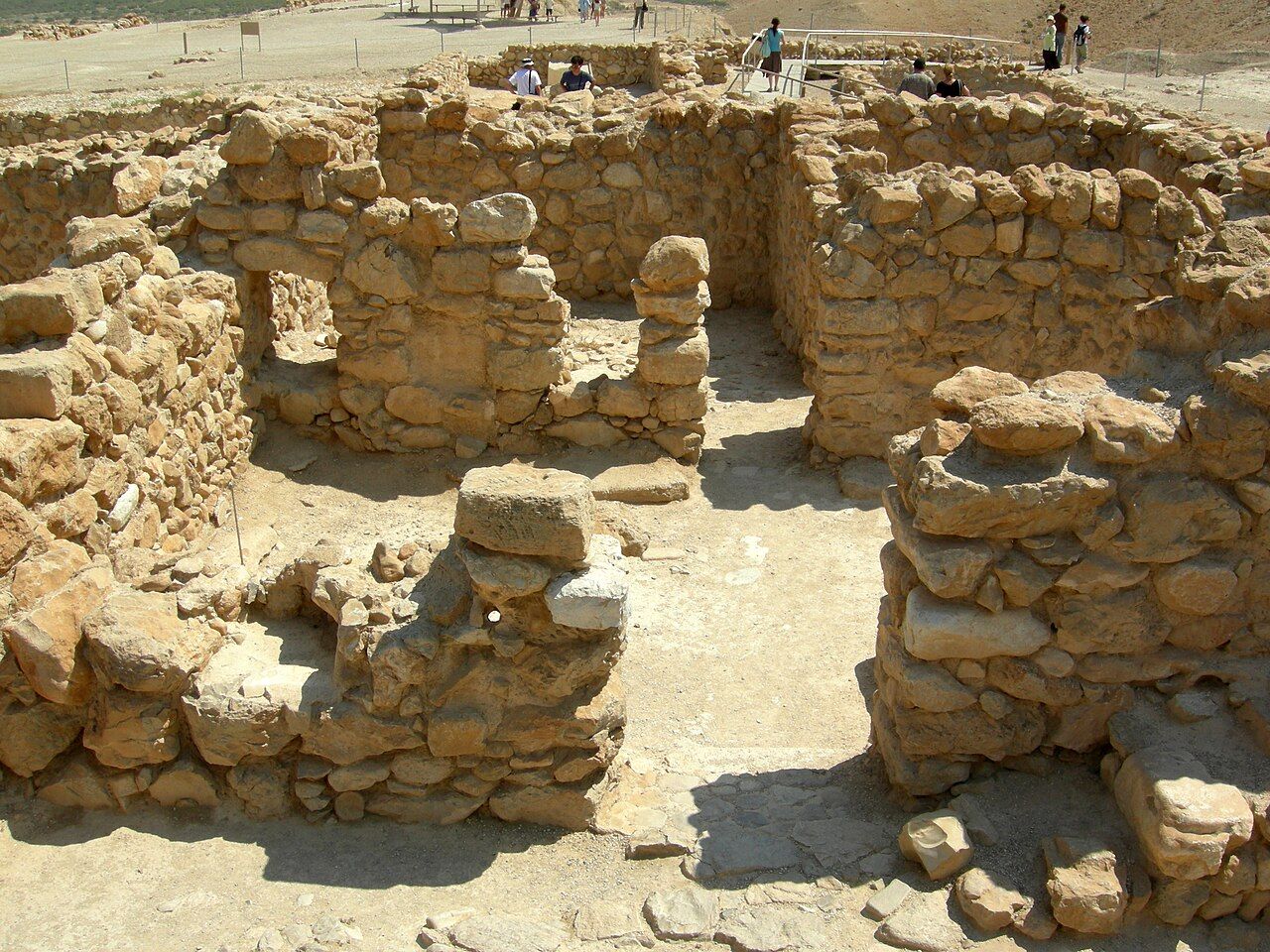
Qumran is a small archaeological site on a marl terrace near the north-western shore of the Dead Sea. Below it lies the sea; behind it rise pale cliffs pocked with caves. In those caves, between 1947 and the mid-1950s, thousands of fragments of ancient scrolls were found, among them the oldest known manuscripts of almost every book of the Hebrew Bible. The ruins next to them have been studied ever since, and debated almost as long.
Qumran lies in the West Bank. It is run as a national park by Israel, and its status, like that of the surrounding area, is disputed under international law. Roads in the area pass checkpoints, where you may be asked for your passport. Check your own government's current travel advice before you set out.
The discovery in 1947
The first scrolls came to light in 1947, when Bedouin shepherds, in the best-known telling searching for a stray goat, found jars in a cave in the cliffs. Inside were leather scrolls wrapped in linen. Some reached scholars in Jerusalem, and over the next decade further searches by Bedouin and archaeologists found scrolls and fragments in eleven caves near the site.
The texts include biblical books, commentaries, hymns, calendars and rules for a religious community. Most are written in Hebrew, with some in Aramaic and Greek, and they date from roughly the third century BCE to the first century CE. Today the most famous pieces are kept and displayed in Jerusalem; the guide to the Israel Museum describes where to see them.
Who lived here
The site was occupied from around the late second century BCE until the Roman army destroyed it during the Jewish revolt, around 68 CE. Many scholars link it with the Essenes, a Jewish group described by ancient writers as living a disciplined, communal life near the Dead Sea, and believe the people living here wrote or copied many of the scrolls. Others see it as a fortress, a villa or a pottery workshop, with the scrolls brought from elsewhere. The question is still open, and the visitor centre presents the main view while noting the debate.
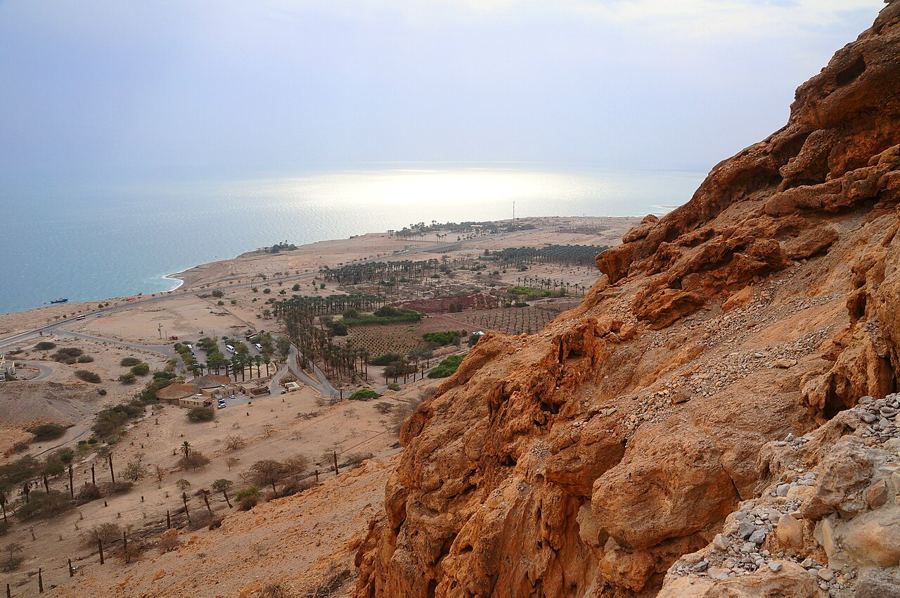 Another day · Dead SeaWaterfalls in the desert, then the lowest sea
Walking the ruins
A short film at the visitor centre sets the scene, then a raised walkway takes you around the excavated buildings. You see a watchtower, a long room sometimes identified as a dining hall, a room often called the scriptorium, where some believe the scrolls were copied, and pottery kilns.
The most striking feature is the water system. An aqueduct brought winter floodwater from the cliffs into a network of channels and stepped pools, some of which may have been ritual baths. One large stepped cistern is split by a crack, generally attributed to the earthquake of 31 BCE, which displaced its steps.
From the southern edge of the terrace you look across a ravine to Cave 4, a hole in the marl cliff where many of the fragments were found. It is the classic view of Qumran. The caves themselves are not open to visitors, and climbing on the cliffs is not allowed.
Notice how close the ruins sit to the caves: some of the caves were cut into the same terrace, within a few minutes' walk of the buildings. That closeness is one of the strongest arguments for a link between the people who lived here and the scrolls hidden nearby. Pottery found in the caves also matches pottery from the site, though scholars still argue over what that proves.
Heat and timing
Qumran is exposed, with little shade outside the visitor centre, and summer temperatures are fierce. Visit early in the day, carry water, and wear a hat. A visit takes around an hour to an hour and a half, including the film. In winter, the light is softer and the air more comfortable, though rare flash floods can close roads in the area after rain.
The light changes the place through the day. Early in the morning the cliffs glow orange and the sea is pale and still; by noon everything turns flat and white, and photographs lose their depth. If you want pictures of Cave 4, the first hour after opening gives the best chance.
Wear sturdy shoes, since paths are dusty and uneven around the walkways. There is a cafeteria and shop in the visitor complex, but bring your own water anyway. Opening hours are shorter in winter and on Fridays; check before you go.
Combining Qumran with Ein Gedi
Qumran sits close to the junction where the road from Jerusalem meets Route 90, so it fits neatly at the start or end of a Dead Sea day. One good plan is to stop here early, drive south along the shore to Ein Gedi for a morning walk to the waterfalls, then float in the sea in the early afternoon.
A longer day starts with sunrise at Masada, continues with Ein Gedi, and finishes at Qumran in the late afternoon, though this works best in the cooler months when parks stay open long enough. Distances on Route 90 are short, but the heat makes everything slower than it looks on the map.
Leave time to look out from the terrace before you go. The sea below, the cliffs behind and the caves in between explain better than any label why a community seeking isolation, or a band of refugees hiding their books, might have chosen this place.