Masada is a flat-topped rock plateau on the eastern edge of the Judean Desert, its cliffs dropping steeply toward the Dead Sea. King Herod the Great turned it into a fortified palace complex in the first century BCE. About seventy years after his death, during the Jewish revolt against Rome, it became the last stronghold of a group of rebels, and the Roman siege that ended it in 73 or 74 CE gave the place its lasting fame. The site is a national park and was inscribed on UNESCO's World Heritage list in 2001.
The most memorable way to see it is to climb the eastern face in the dark and reach the top as the sun rises over the mountains of Jordan across the water. The light turns the cliffs gold, the Dead Sea goes from grey to silver, and for a little while the air is cool.
The Snake Path before dawn
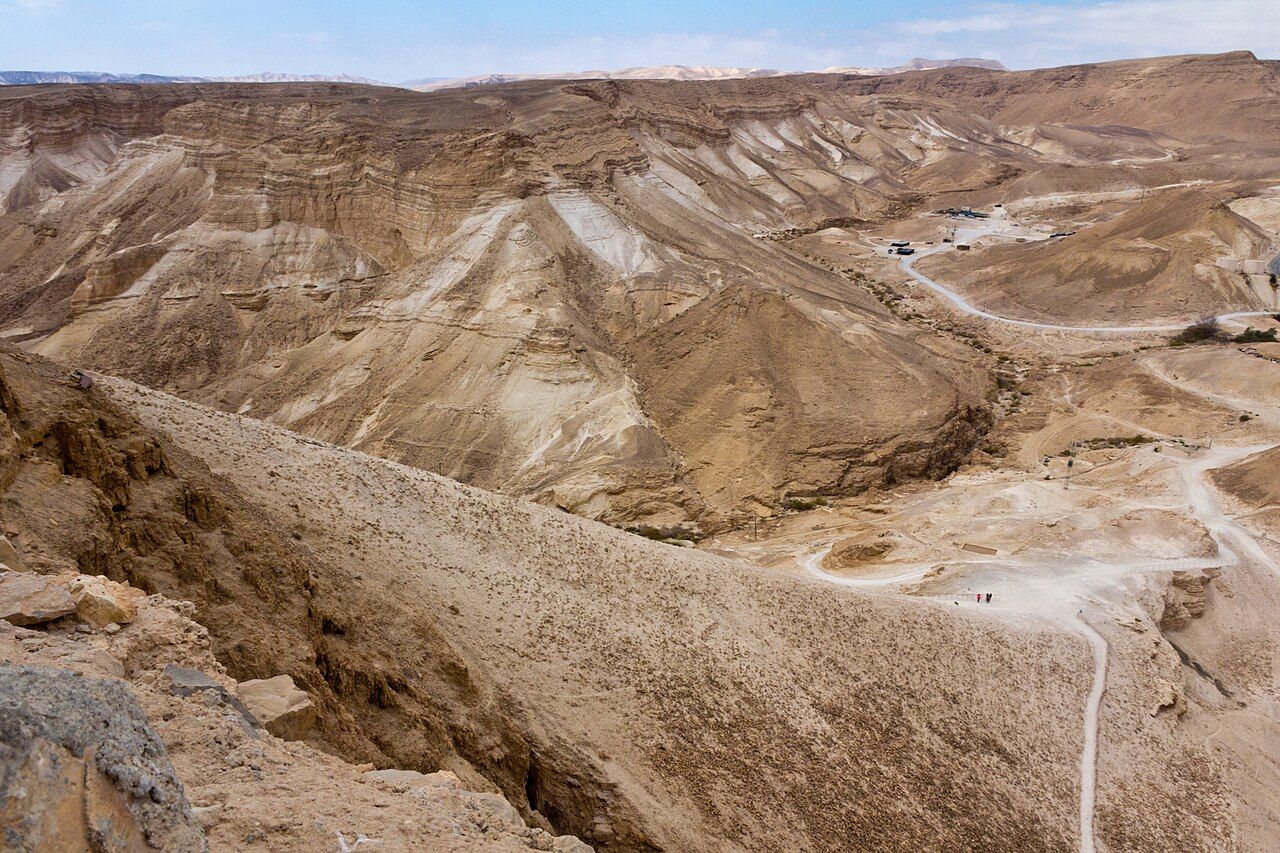
The Snake Path winds up the eastern side of the mountain from the visitor centre near Route 90. It climbs roughly three hundred and fifty metres in a series of tight switchbacks, many of them stepped, and fit walkers take forty-five minutes to an hour. The path opens early, usually about an hour before sunrise, so that walkers can reach the top in time; the exact time shifts through the year, so check before you go.
Park staff check that walkers set out with water and suitable shoes, and may turn back anyone who looks unprepared. Toilets and water taps are at the visitor centre at the bottom, so use them before you start.
Bring a headlamp for the first part, as the path is not lit. Go at your own pace, stop when you need to, and drink as you climb even if the air feels cool. The steps are uneven, and the drop beside the path is real, though there are railings in the steepest sections. Near the top a final set of steps brings you onto the plateau through the old gate.
If the climb is too much, a cable car runs from the same visitor centre to near the top, usually starting a little later in the morning. It is fast and gives wide views of its own, but its first car normally runs after sunrise. Many visitors walk up and ride down, saving their knees.
On the summit: Herod's palaces
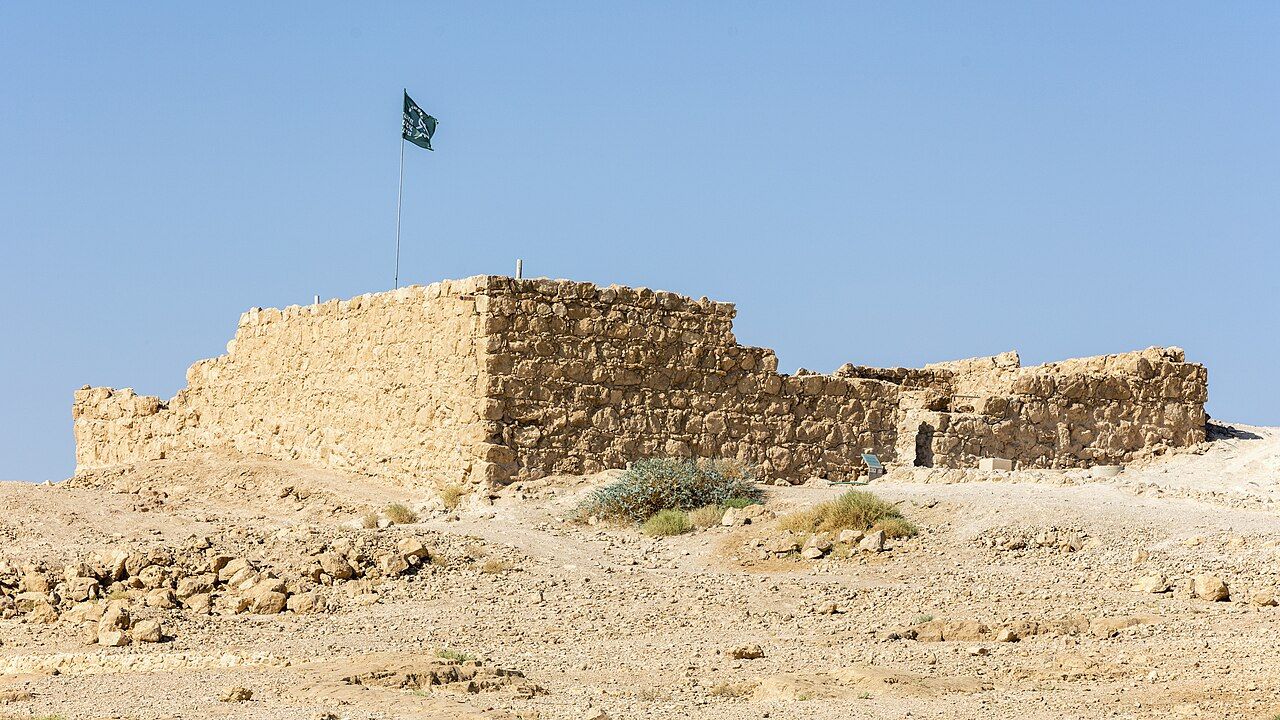
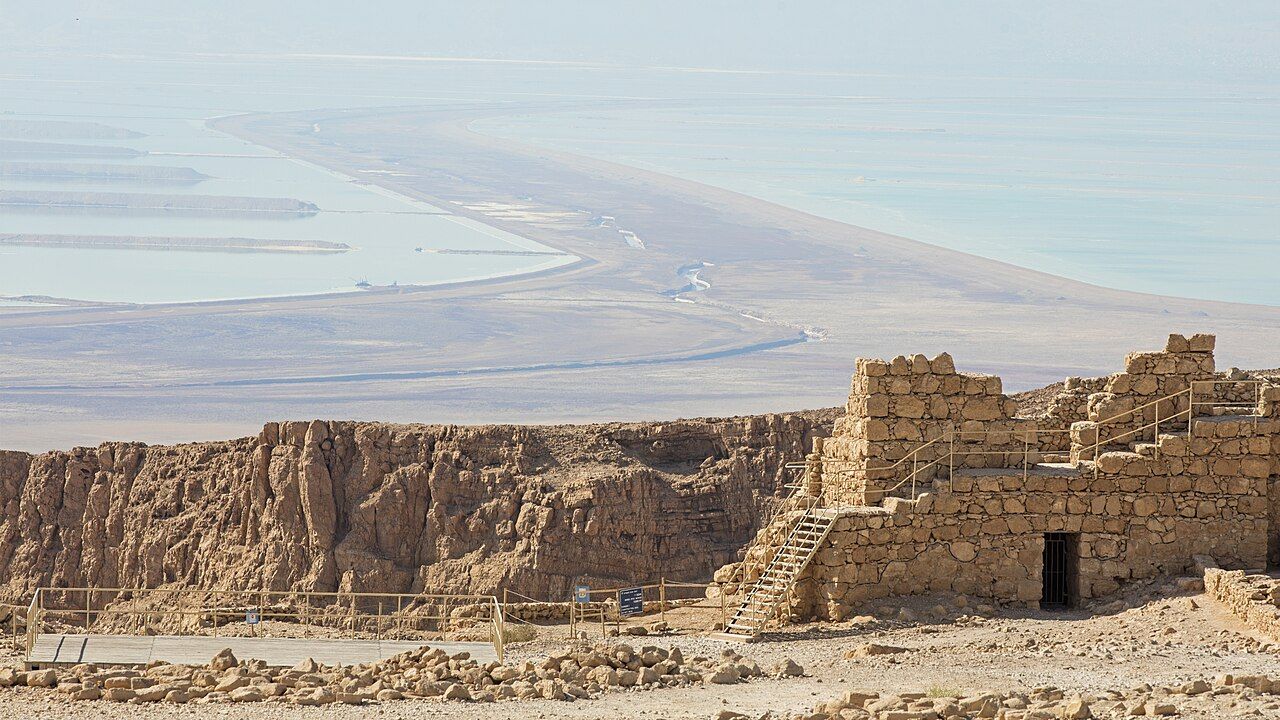
The plateau is about six hundred metres long and fairly level, and you can walk the main sites in a couple of hours. Herod built storehouses, bathhouses, cisterns and walls, but his most ambitious work was the Northern Palace, which hangs from the northern tip of the rock on three terraces stepping down the cliff. Stairs take you down to the lower levels, where traces of painted plaster and columns survive. The views north along the Dead Sea are wide.
Nearby are the large storerooms, built to hold grain, oil and wine for a long siege, and a bathhouse laid out on the Roman model, with hot, warm and cold rooms. Along the casemate wall that rings the plateau, you pass rooms later used by the rebels as living quarters, a building identified as a synagogue, and ritual baths. A small Byzantine church from a later period of monastic life stands near the centre.
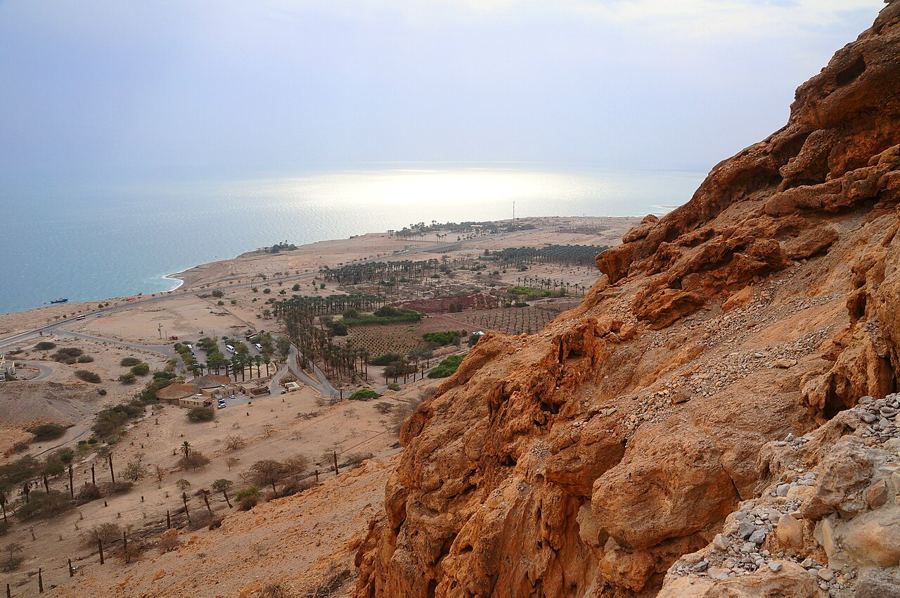 Another day · Dead SeaWaterfalls in the desert, then the lowest sea
One of the most impressive feats here is the water system. Rain that fell a few times a year in winter was channelled from the wadis into large rock-cut cisterns on the slope, from where it was carried up to the summit. Without them, a long stay on the rock would have been impossible.
The siege ramp and the story of the fall
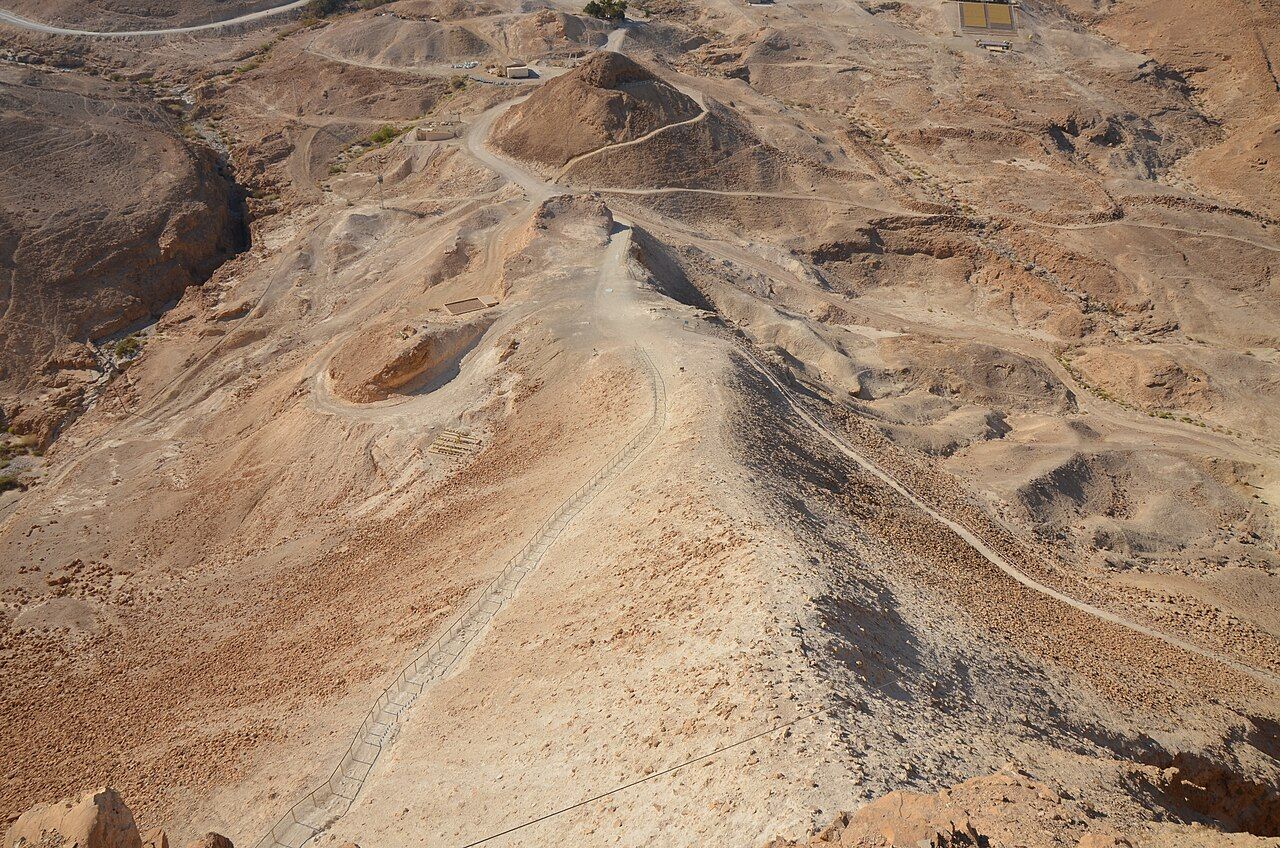
On the western side of the plateau, look down at the long earthen ramp rising from the desert floor. The Roman Tenth Legion built it to bring a siege tower and battering ram to the walls. The outlines of the Roman camps and the siege wall that encircled the mountain are still clear from above, among the best-preserved Roman siege works anywhere.
The account of the end of the siege comes from the first-century historian Josephus, who describes the rebels choosing death over capture when the walls were breached. Historians and archaeologists continue to debate how far his account can be taken at face value. Either way, Masada has become a powerful symbol in modern Israel, and you may see army units or school groups holding ceremonies on the summit.
Either way, Masada has become a powerful symbol in modern Israel, and you may see army units or school groups holding ceremonies on the summit.
The ramp path can be walked from the western side of the mountain, reached by a separate road from the town of Arad. It is shorter and easier than the Snake Path, but the two entrances are not linked by road around the base, so choose one before you set out.
Heat, closures and safety
The Dead Sea basin is one of the hottest places in the country. In summer, temperatures can rise above forty degrees by mid-morning, and the park closes the Snake Path during the hottest hours. Even in spring and autumn, the heat builds quickly once the sun is up. Aim to be off the mountain or in the shade of the visitor centre by late morning.
Carry at least three litres of water each, more in summer, and drink steadily. Wear a hat, sunscreen and light clothing that covers your skin. Signs of heat exhaustion include headache, dizziness and nausea; stop, find shade, drink and cool down, and seek help from park staff if they persist. Do not attempt the climb in the middle of the day.
The park sits on Route 90, which runs along the western shore of the Dead Sea. Check your own government's current travel advice before driving in the region, and follow any instructions from park staff or police.
Fitting it into a day
Masada at sunrise leaves the rest of the day open. After coming down, drive about twenty minutes north to the springs and waterfalls of Ein Gedi, then float in the Dead Sea in the early afternoon. Those with energy left can continue north to Qumran, where the scrolls were found. If you would rather see a different desert, the great erosion crater at Mitzpe Ramon is a longer drive south into the Negev.
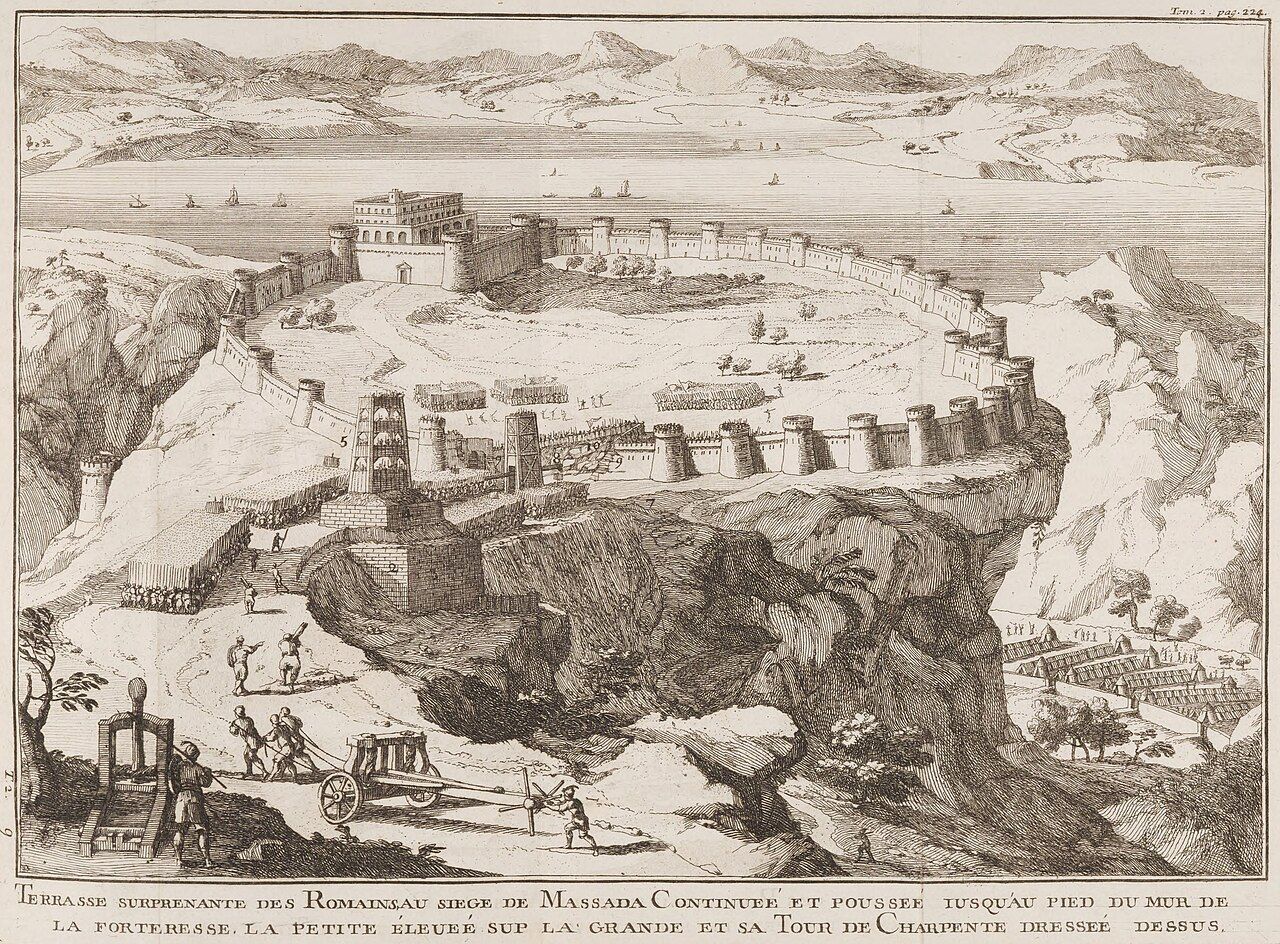
An older view of the siege survives in an eighteenth-century engraving that imagined the Roman works as a tiered terrace with a tower. Compared with what you see from the summit, it shows how long the story has caught the imagination.