
Western Jerusalem holds two institutions that most visitors want to see and few manage to fit together well. The Israel Museum is a large, airy campus of archaeology, art and Jewish life, home to the Dead Sea Scrolls. Yad Vashem, on the Mount of Remembrance a few kilometres away, is the country's memorial to the six million Jews murdered in the Holocaust. A day that includes both needs some thought about order, pace and mood.
The usual advice is to visit the Israel Museum in the morning and Yad Vashem in the early afternoon, or the other way round if you prefer to finish somewhere lighter. Many people find that after Yad Vashem they want quiet rather than galleries. Decide which suits you, and resist the urge to rush either.
The Israel Museum campus
The museum spreads across a hilltop in the Givat Ram area, near the Knesset and the Hebrew University's older campus. Its low, pale stone pavilions, linked by covered walkways and terraces, were designed in the 1960s to step down the slope like a hillside village. Inside, the collections run from prehistoric tools to modern art.
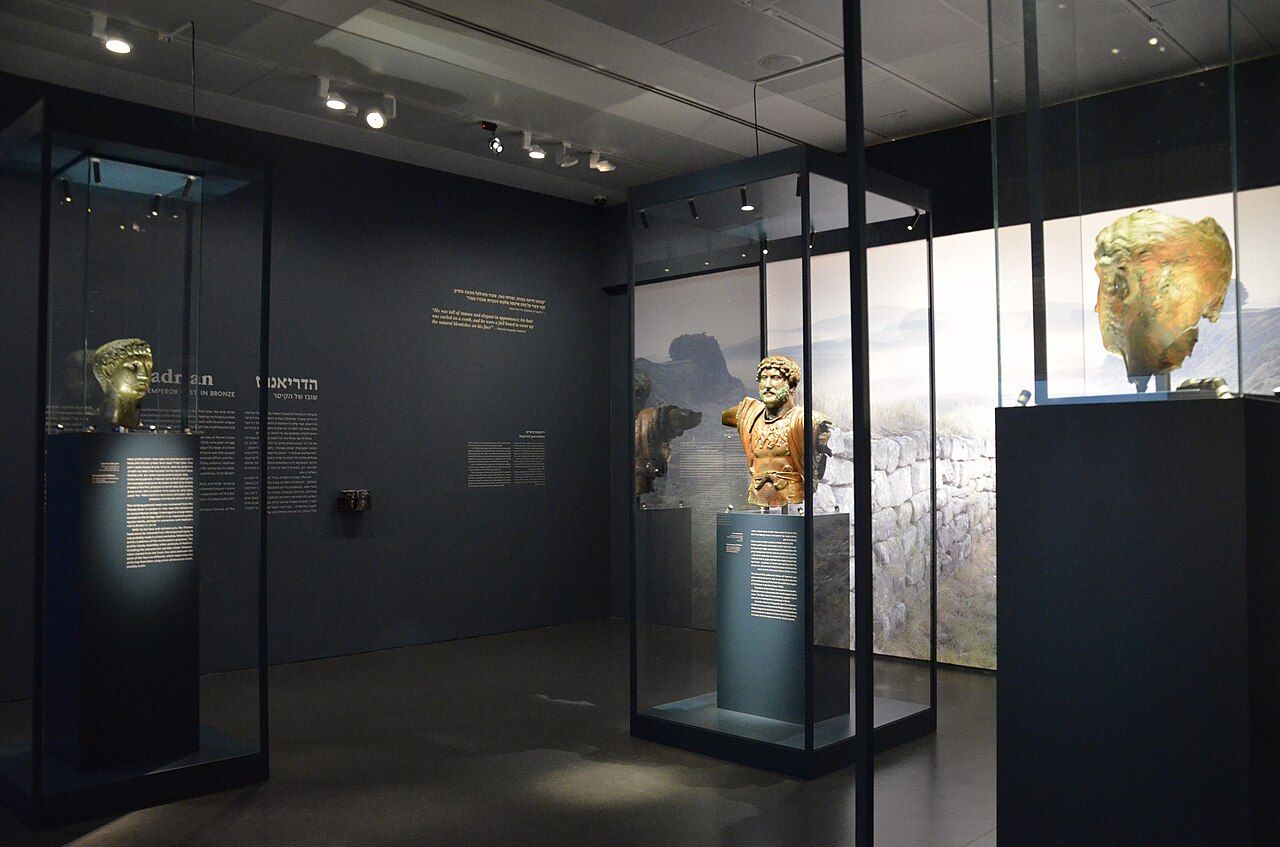
The archaeology wing is the strongest for a first visit. It follows the land from the earliest human settlement through Canaanite, Israelite, Persian, Hellenistic, Roman and Islamic periods, with ritual objects, inscriptions, mosaics and everyday pottery. One of its most striking pieces is a bronze statue of the Roman emperor Hadrian, found in the Beit She'an valley, which shows how Roman power presented itself in the province.
Elsewhere, the Jewish art and life wing displays complete synagogue interiors moved from Europe, India and the Caribbean, along with ceremonial objects and clothing. The fine arts wing and the outdoor art garden suit anyone with spare time. A full day would not exhaust the place; two or three hours give you the highlights.
The Shrine of the Book and the Second Temple model
The Shrine of the Book is the white dome you see from the entrance path, its shape inspired by the lids of the clay jars in which some of the Dead Sea Scrolls were found. Facing it stands a black basalt wall. The contrast reflects a theme in one of the scrolls, a struggle between the sons of light and the sons of darkness.
Inside, a central display shows a facsimile of the Great Isaiah Scroll, the best-preserved of the biblical scrolls found near Qumran, while original fragments are rotated in and out to protect them from light. The rooms are dim and cool, and labels explain how the scrolls were discovered, what they contain and why they matter for the history of the Hebrew Bible. If you plan to see the site where the scrolls were found, the guide to Qumran covers that day.
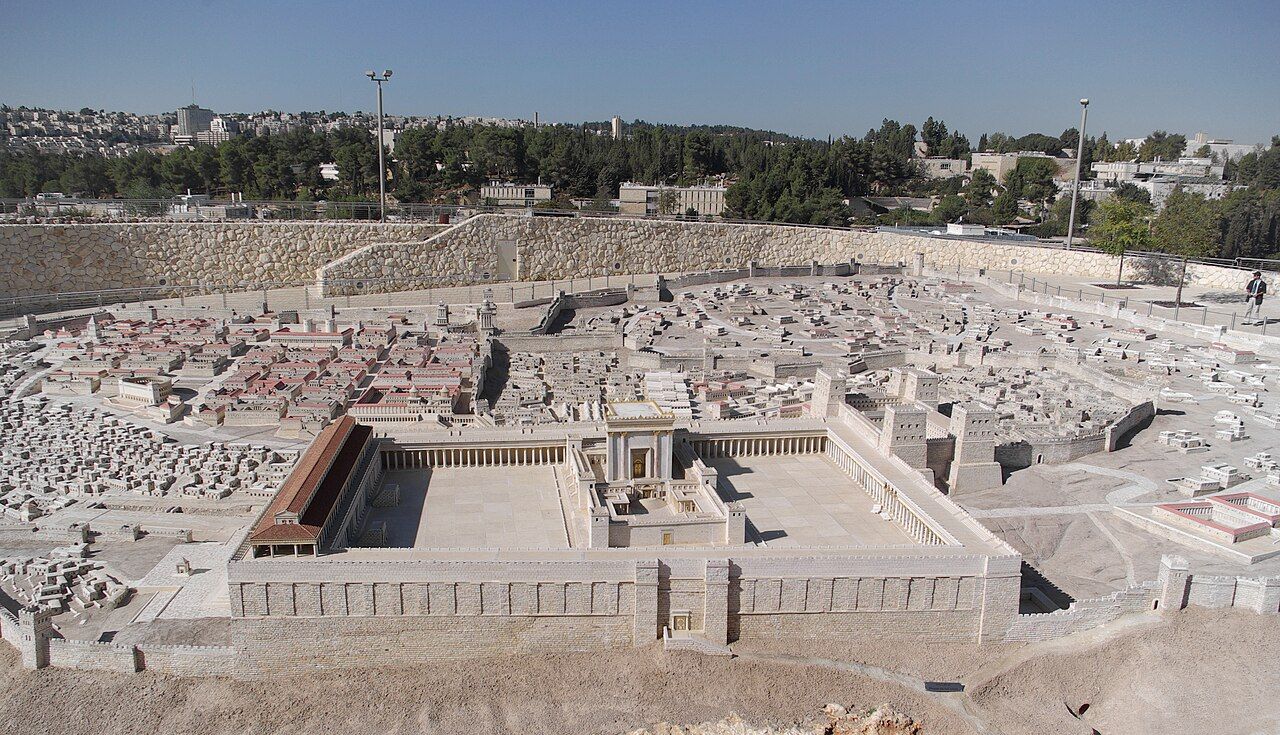
A short walk away stands the Holyland Model of Jerusalem, a large outdoor reconstruction of the city as it may have looked in the late Second Temple period, before the Roman destruction in 70 CE. It is built of stone at a scale of one to fifty and gives you an aerial view of the Temple, the palaces and the walls. Walking around it helps make sense of what remains on the ground today in the Old City quarters and on the ridge of the City of David.
Walking around it helps make sense of what remains on the ground today in the Old City quarters and on the ridge of the City of David.
 Another day · JerusalemInto the water beneath the ridge
Yad Vashem
Yad Vashem was founded by law in 1953 to commemorate the victims of the Holocaust, document its history and honour the non-Jews who risked their lives to save Jews. Its campus on the Mount of Remembrance, beside Mount Herzl, includes memorials, an archive, a research centre and a school. Entry to the grounds and the main museum has traditionally been free, but arrangements change, so check before you go whether you need to reserve a time.
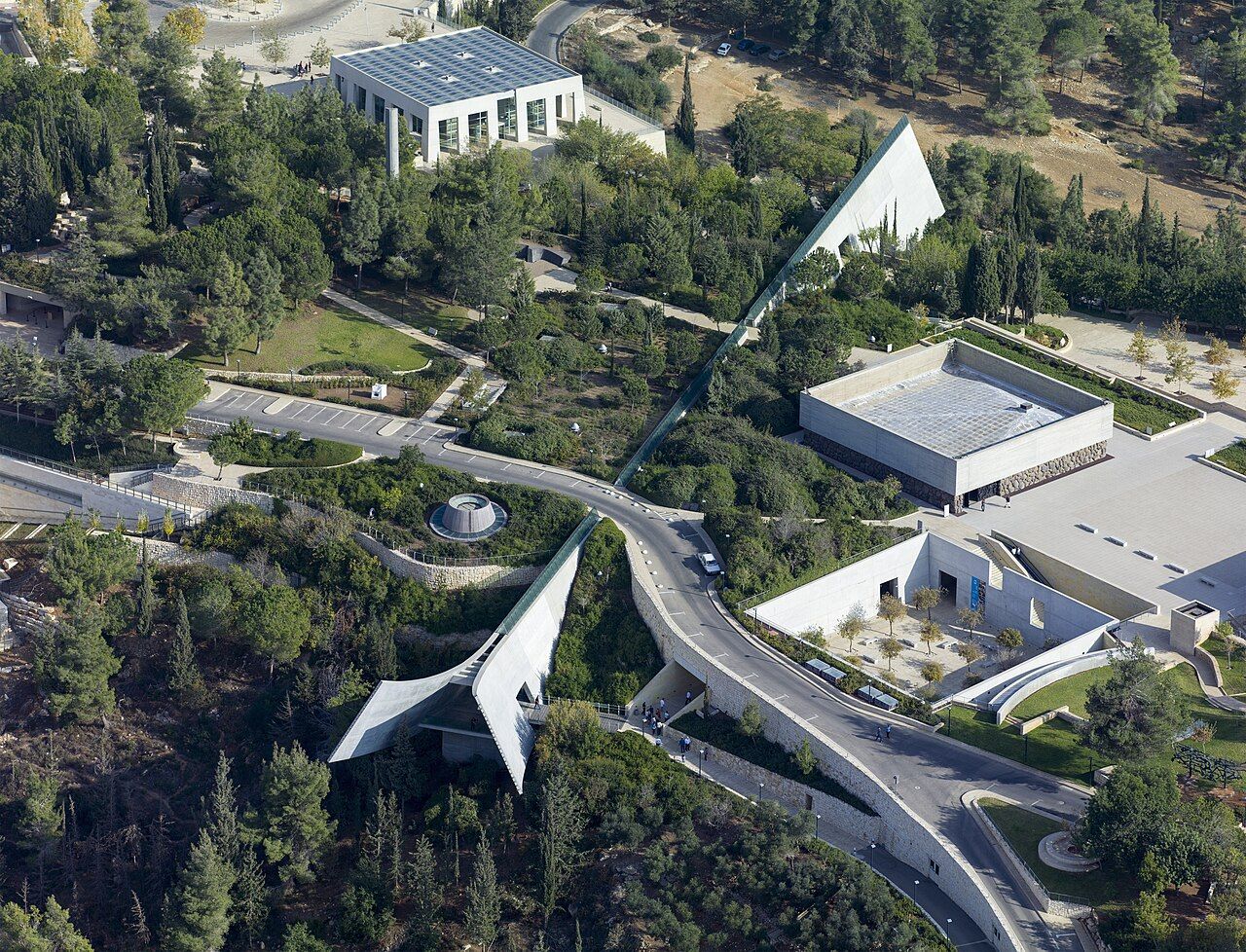
The Holocaust History Museum, opened in 2005 and designed by the architect Moshe Safdie, is a long triangular concrete prism that cuts through the hill. Its two ends open to the air; the far end frames a view over the green hills and valleys west of Jerusalem. Between them you walk a zigzag route through galleries set off the central spine, each covering a chapter: Jewish life before the war, the rise of Nazism, the ghettos, the camps, resistance, rescue, and the survivors who rebuilt their lives.
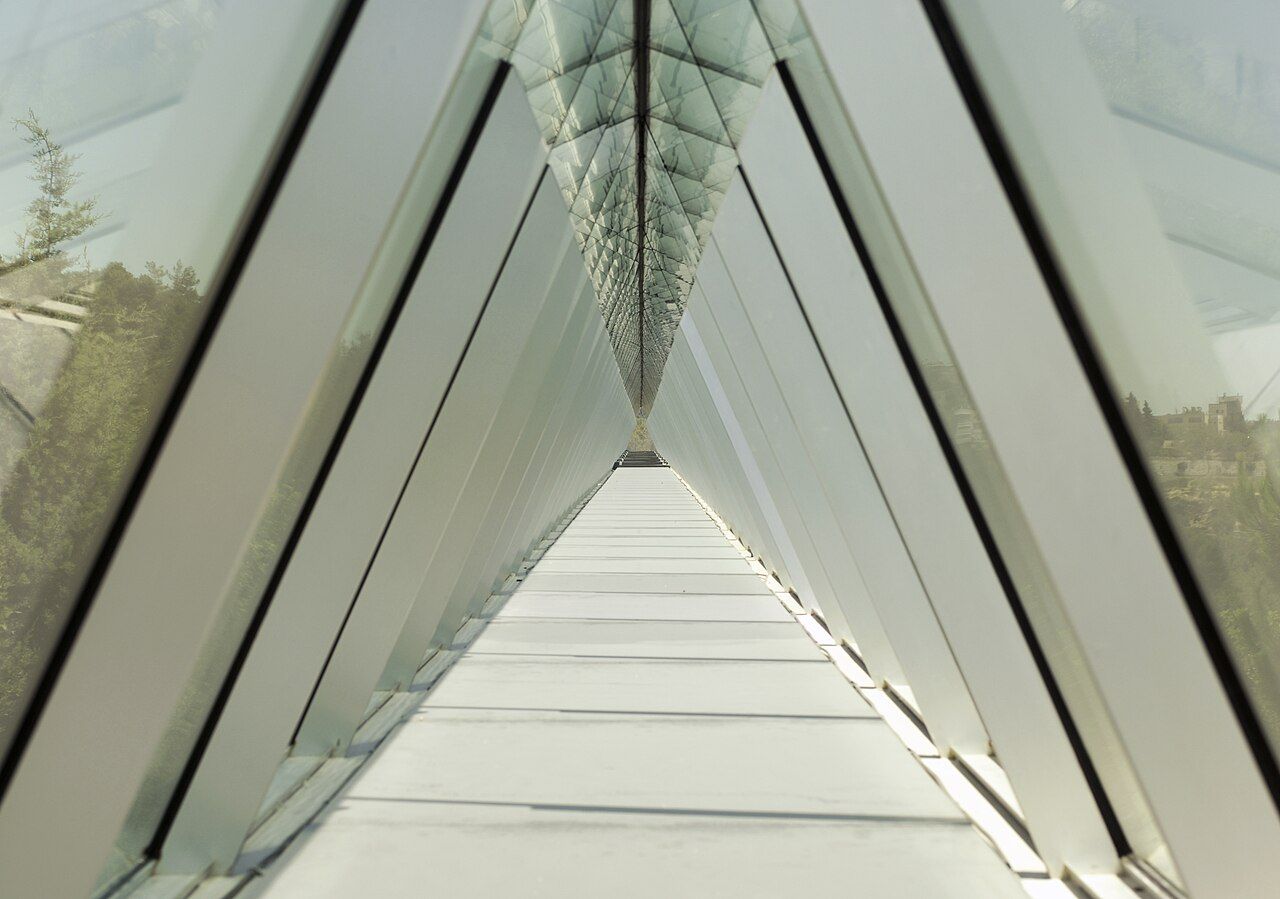
The exhibits use original objects, documents, film and testimony from survivors. It is a demanding visit, emotionally as well as physically, and most people need two to three hours. The museum advises that it is not suitable for young children; check the age guidance if you are travelling with a family.
The Hall of Names and the memorials
Near the end of the museum, the Hall of Names holds pages of testimony, short biographies submitted by relatives and friends to record each victim by name. A tall cone overhead is lined with photographs of some of those who died, and a second cone, cut into the rock below, reflects them in water. The shelves around the room have space for millions of files, many still empty.
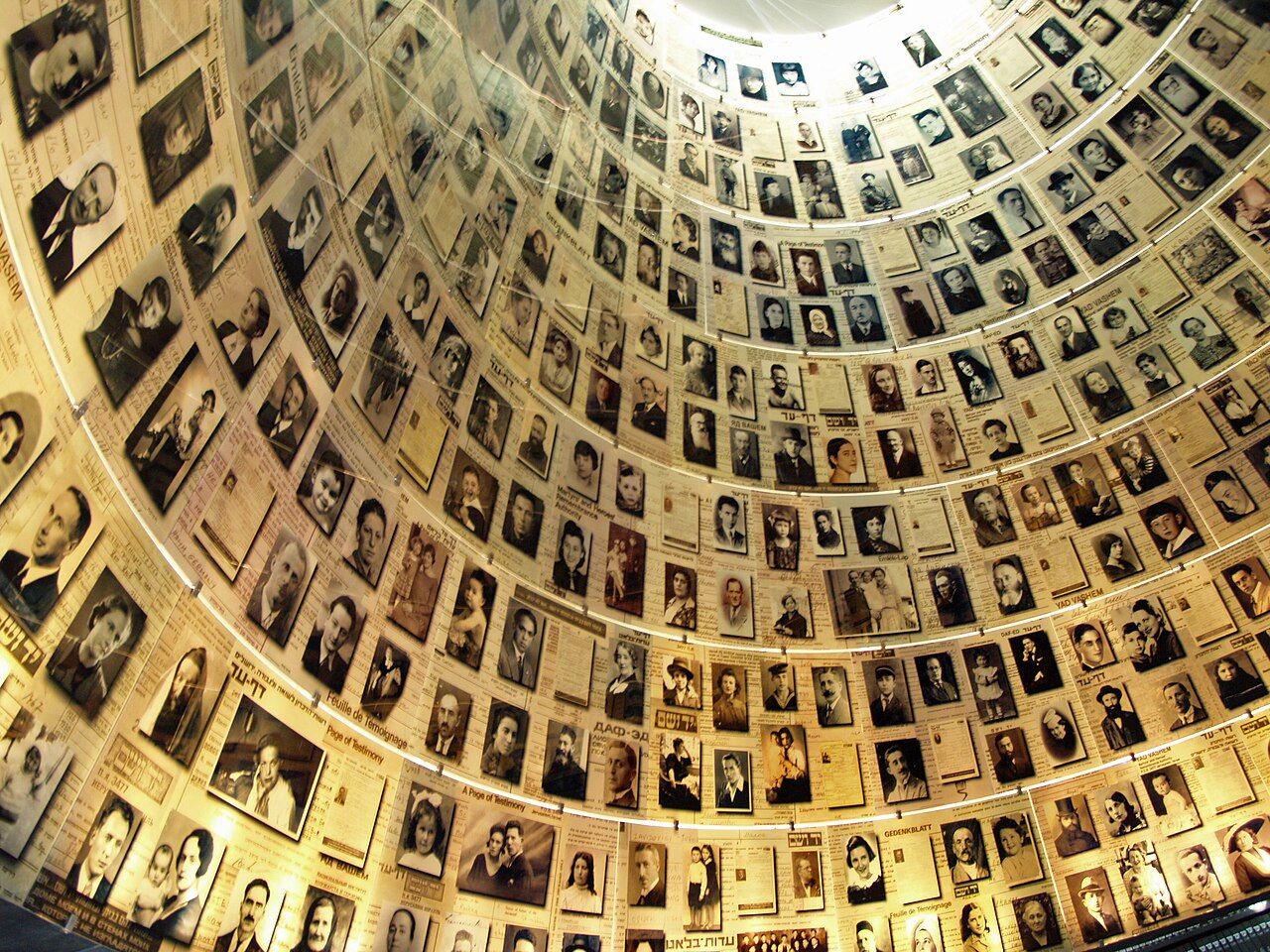
Outside, paths lead to the Hall of Remembrance, where an eternal flame burns above a floor engraved with the names of camps, and to the Children's Memorial, a dark space in which a few candles are reflected endlessly by mirrors while names are read aloud. The Avenue and Garden of the Righteous Among the Nations honour the rescuers with trees and plaques. Allow time for these; many people find them more affecting than the museum itself.
Timing, dress and respect
Dress at Yad Vashem is not regulated as at holy sites, but the place calls for modest, quiet behaviour. Photography is restricted in parts of the history museum; follow the signs. Talk softly, switch off your phone's sound, and give others space at the displays. Large bags may not be allowed inside, so travel light.
The light rail Red Line runs along Herzl Boulevard to the Mount Herzl stop, from where a short walk, or a shuttle when one runs, brings you to Yad Vashem. The Israel Museum is reached by bus or taxi from the city centre. Opening hours differ between the two, and both change around holidays; check before you go.
Both sites have cafeterias and rest areas, and both involve more walking than you might expect, with slopes and long corridors. Wear comfortable shoes, carry water in summer, and plan a pause between the two. Visitors with limited mobility can usually borrow wheelchairs; ask at the entrance.
After a day like this, an evening walk in the quieter lanes of Nachlaot or a slow meal near the market is a gentle way to come back to the present.