
Israel is compact. From Tel Aviv you can reach Jerusalem in under an hour, Haifa in about the same, the Dead Sea in under two hours and Eilat, at the far southern tip, in four to five. That makes it possible to stay in one or two bases and see much of the country as a series of day routes. How you move between them depends on where you are going and, above all, on what day of the week it is.
Trains
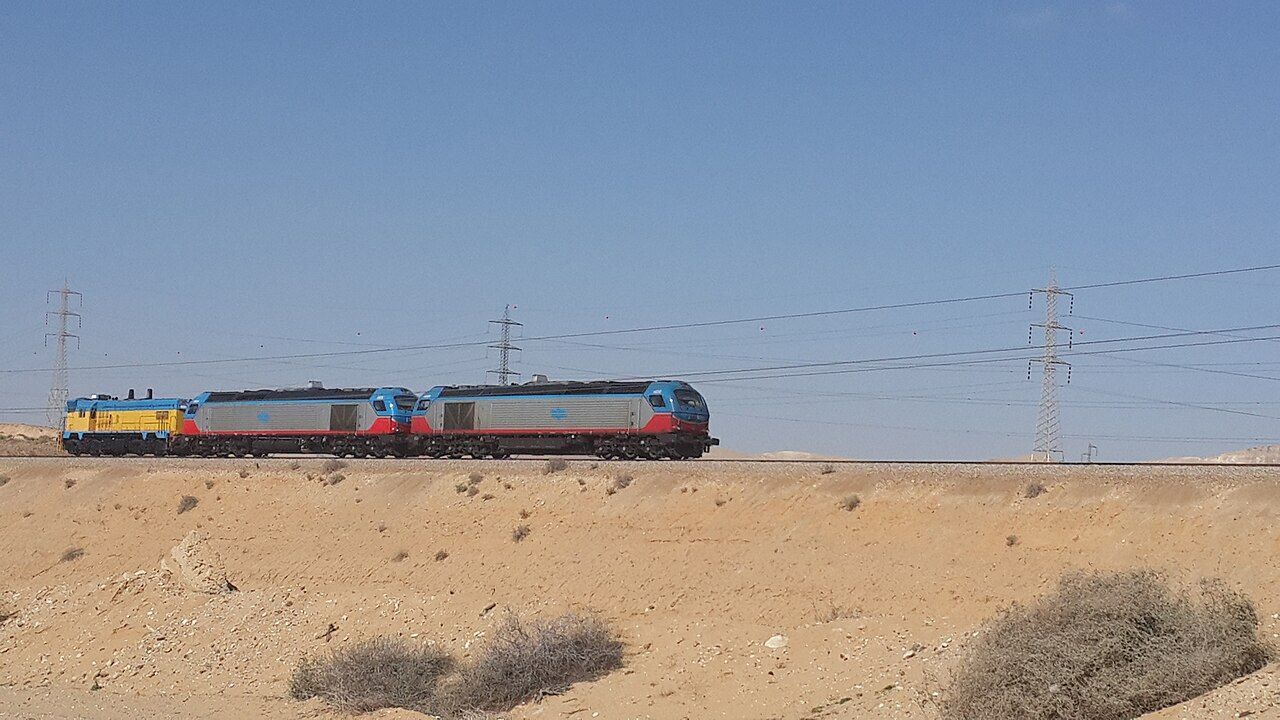
The national rail network runs mainly along the coast, from Nahariya in the north through Acre, Haifa, Tel Aviv and on to Ashkelon and Beersheba, with branches inland. A high-speed line connects Tel Aviv and Ben Gurion Airport with Jerusalem, arriving at a deep underground station in the west of the city. Trains are clean, modern and usually the fastest way between the big cities, especially in heavy traffic.
The rail line is ideal for coastal day routes: Haifa and Acre are both on it, as is the station nearest to Caesarea. Trains do not reach the Dead Sea, the Galilee lakeshore or most of the Negev, and they do not run on Shabbat.
Carriages get crowded at commuter hours and on Sunday mornings, when soldiers travel back to their bases after the weekend. Late on Saturday night, after Shabbat ends, trains restart on main lines and can be very full. Travelling outside those peaks makes for a calmer ride.
Buses and shared taxis
Intercity buses cover nearly the whole country, from small kibbutzim to the far south. Several operators run different regions, but fares and payment are standardised across the network: you pay with a rechargeable public transport card, or in many cases by contactless bank card or a phone, rather than cash. The rules on payment have changed in recent years, so check before you go. Central bus stations in the big cities are the hubs for long-distance routes, and some popular routes need advance seats at busy times.
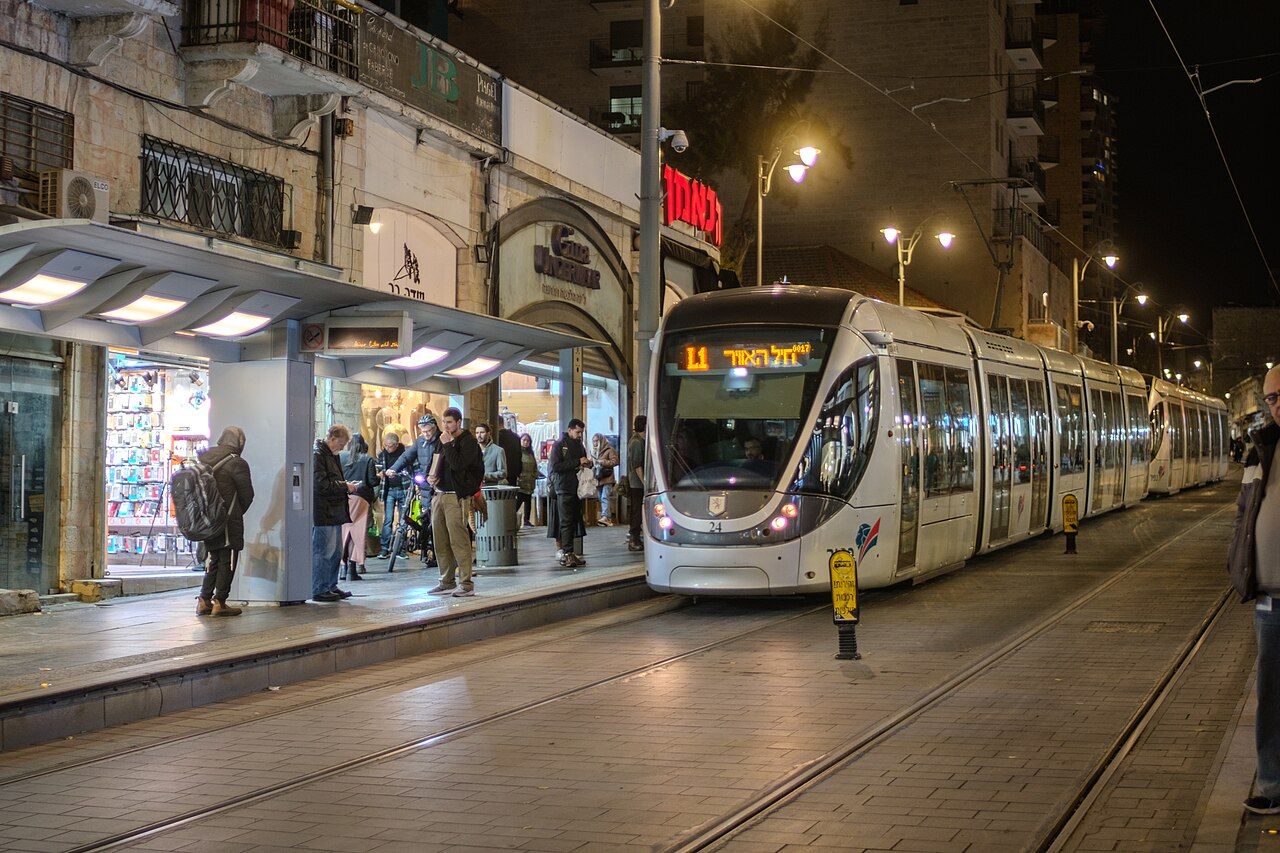
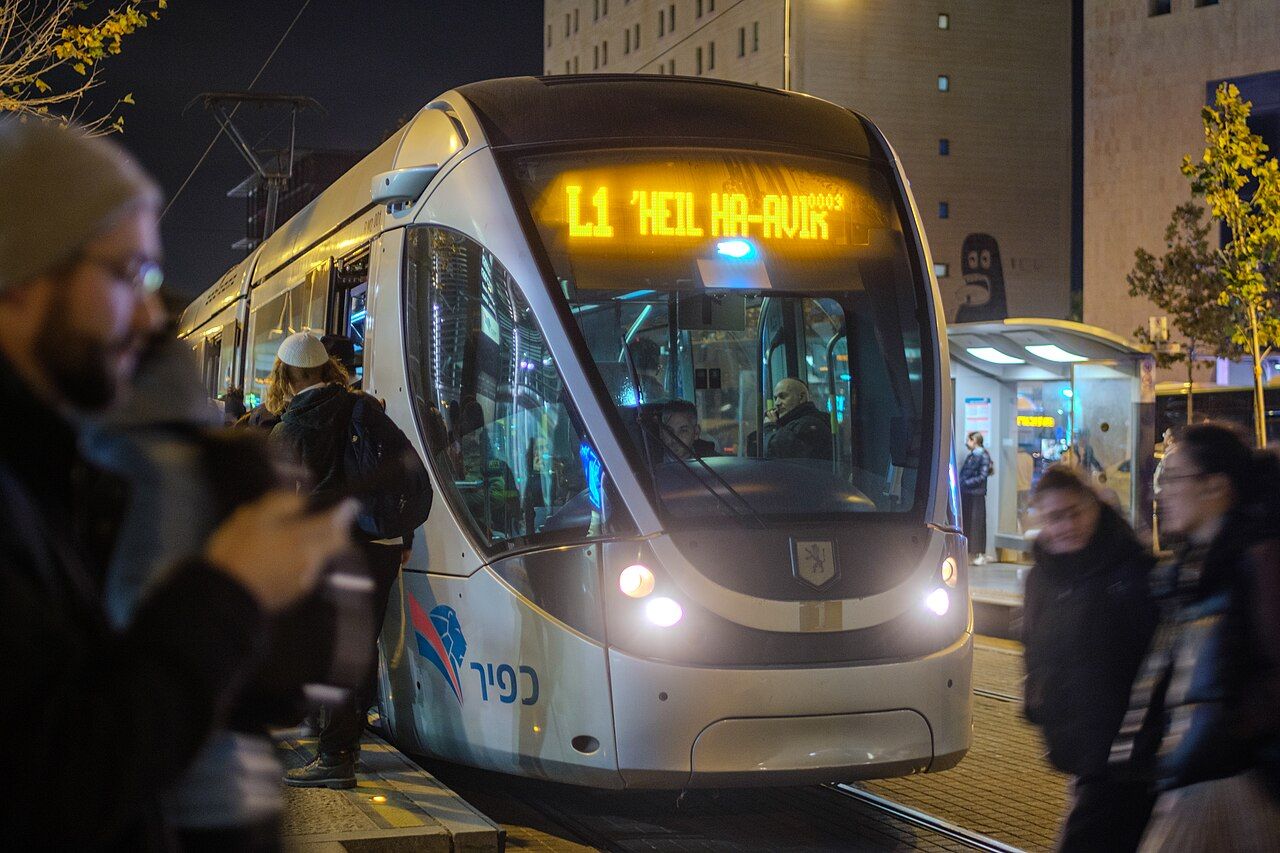
Within Jerusalem, a light rail line runs through the city centre and out to the north and south-west, and more lines are being added. Tel Aviv has its own light rail too. Both are easy to use and pass close to many of the sights.
A sherut is a shared minibus taxi that follows a fixed route and leaves when it fills. Sheruts run on some main routes between cities, including between Tel Aviv and Jerusalem, and within cities they often shadow busy bus lines. Some keep running on Shabbat, which makes them valuable at weekends. You pay the driver and say where you want to get off.
 Another day · BasicsTravelling around Shabbat and the holidays
Driving
A car is by far the most flexible option for the desert, the Galilee and anywhere off the main lines. Israelis drive on the right, road signs are generally in Hebrew, Arabic and English, and the main highways are good. Traffic around Tel Aviv and Jerusalem is heavy at rush hours, and parking in city centres is hard and strictly enforced; colour-coded kerbs show where you may stop.
Some practical points:
- One north-south highway uses electronic tolls with no booths. Rental agreements explain how charges are passed on.
- Navigation apps work well, but always check that a suggested route does not take you somewhere you do not intend to go.
- Fuel stations are frequent in the centre and far apart in the Negev. Fill up before long desert stretches.
- Speed cameras are common, and fines follow.
Roads through the West Bank
Some useful routes pass through the West Bank, the territory between Israel and Jordan whose status is disputed and which has areas under different civil and security control. Route 1 between Jerusalem and the Dead Sea and Route 90 along the Jordan Valley both cross it, and they are used every day by all kinds of traffic. Checkpoints may be present.
A few things are worth knowing in plain terms. Israeli law bars Israeli citizens from entering the areas under Palestinian Authority control, and red signs mark these entrances. Many car rental agreements do not provide insurance cover in those areas. Visitors who want to go to cities such as Bethlehem or Jericho usually travel by public transport or with local drivers based on that side. Rules and conditions change; read your rental terms and your own government's current travel advice before planning any route here, as covered in safety and travel advisories.
Shabbat and service gaps
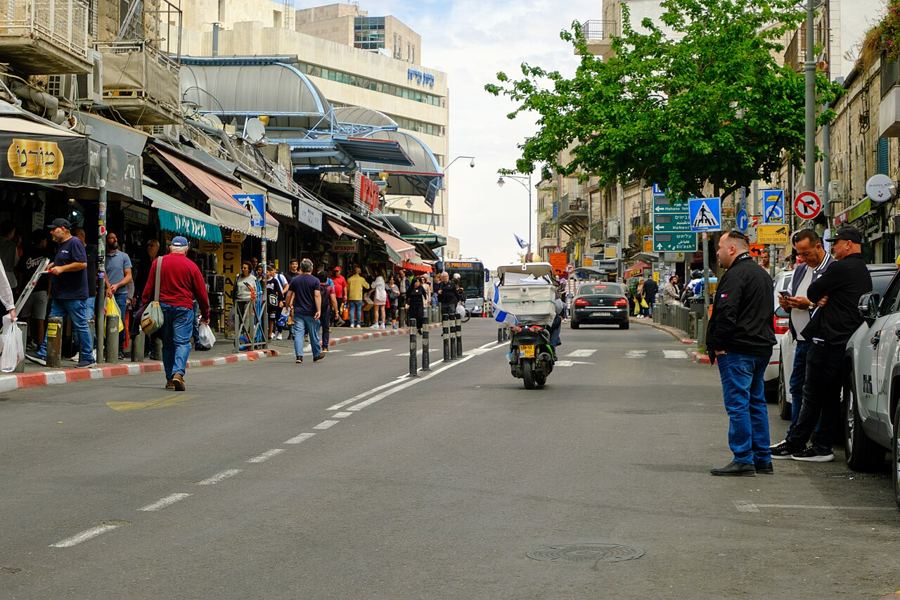
Shabbat runs from Friday afternoon to Saturday evening, and it changes the transport picture completely. Trains stop. Most intercity and city buses stop, though some cities, among them Haifa and parts of Tel Aviv and its suburbs, keep some lines running. Sheruts and taxis fill much of the gap. Service winds down from early Friday afternoon and resumes after dark on Saturday, often with crowds at stations.
Jewish holidays work the same way, and on Yom Kippur almost all traffic stops, private cars included. Full details are in travelling around Shabbat and the holidays.
Choosing for each route
As a rough guide to the day routes on this site:
- Jerusalem. Walk, use the light rail, or take buses; driving and parking in the centre are best avoided.
- The coast. Trains for Haifa and Acre; a car or a train and taxi for Caesarea.
- The Galilee. A car makes the lake and the hill towns far easier, though buses reach the main towns.
- The Dead Sea. Buses run along the shore, but timings are sparse. For Masada at sunrise you will need a car or a night nearby.
- The Negev. A car is close to essential for the crater, the canyons and Timna.
Taxis are metered in cities, and you can ask the driver to use the meter; for longer runs, agree the fare in advance. Rates rise at night and on Shabbat. Plan the night before each day out. Look at the last bus back, the day's sunset time and what closes early, and you will rarely be caught out.