
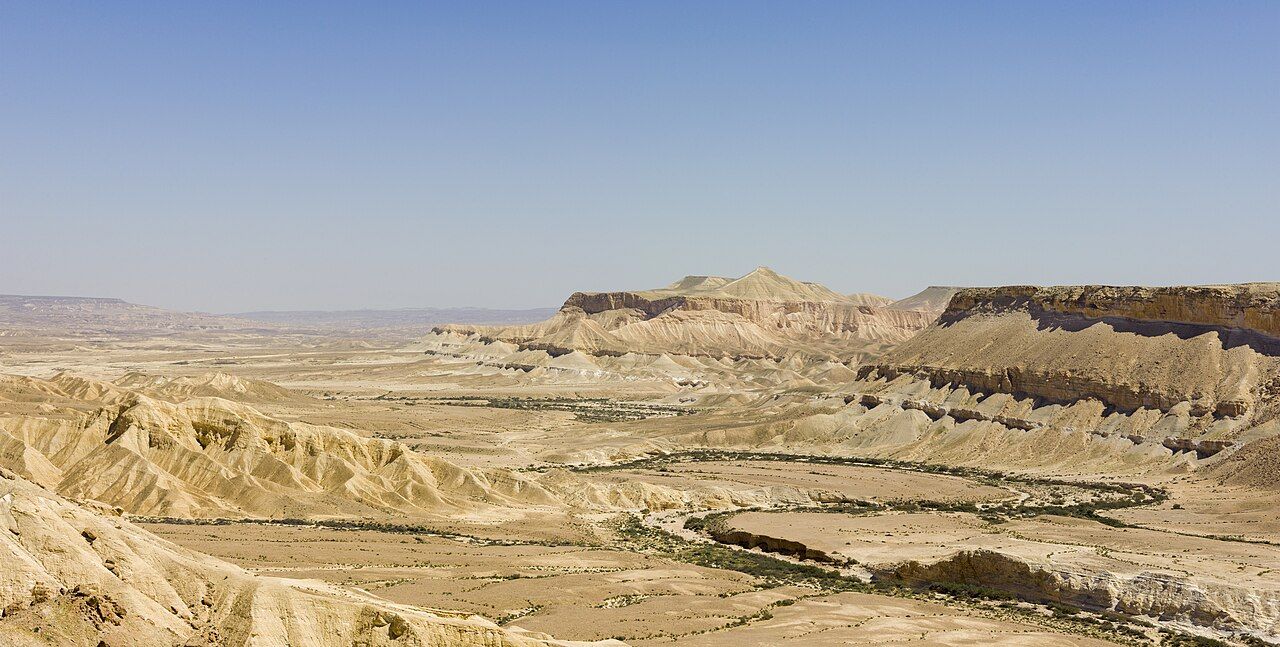
For several centuries around the turn of the era, camel caravans carried frankincense and myrrh from southern Arabia to the ports of the Mediterranean. The final stretch crossed the Negev, and the people who controlled it were the Nabataeans, the traders best known for their rock-cut capital at Petra in today's Jordan. Along the route they built forts, way stations and towns. Four of them in the Negev, Haluza, Mamshit, Avdat and Shivta, are listed together by UNESCO as the Incense Route and its desert cities.
Avdat is the most visited, and it sits within easy reach of two other stops: the canyon spring at Ein Avdat and the plateau of Sde Boker. Strung along Route 40 between Beersheba and Mitzpe Ramon, they make a natural desert road day.
Avdat, the hilltop city
Avdat stands on a high ridge commanding the road, and the drive up from the visitor area to the top of the hill gives you a sense of why it was chosen. The Nabataeans founded it as a caravan station, possibly naming it after one of their kings, and it grew through Roman and Byzantine times into a town with temples, churches, a bathhouse, houses and a fortress.
What you see today comes mostly from the later periods. Two Byzantine churches stand on the acropolis, with their apses and columns partly raised again, beside walls of the fortress and a tower. Down the slope are cave dwellings cut into the soft limestone, wine presses showing that the townspeople farmed the surrounding valleys, and a Roman bathhouse at the foot of the hill. Look out over the dry valleys below and you can still trace low stone walls, the remains of ancient terraces that caught every drop of winter flood water to grow crops.
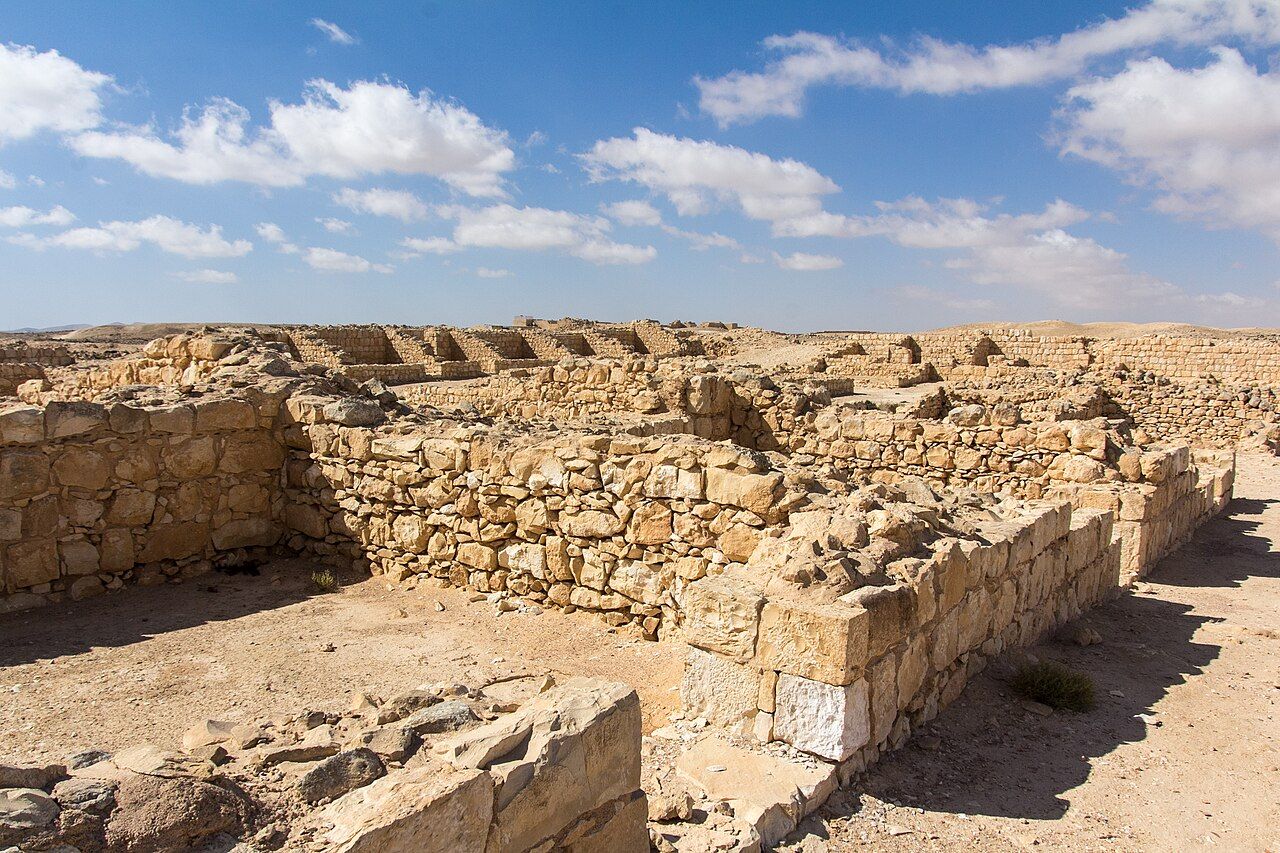
The site is a national park with a visitor centre near the road. A short film and displays in the visitor centre help set the scene before you climb, and a path links the lower ruins with the top of the hill for anyone who prefers to walk. Shade is limited on the hill, so go early. Opening times are shorter in winter and on Fridays, and fees change, so check before you go.
Ein Avdat's canyon
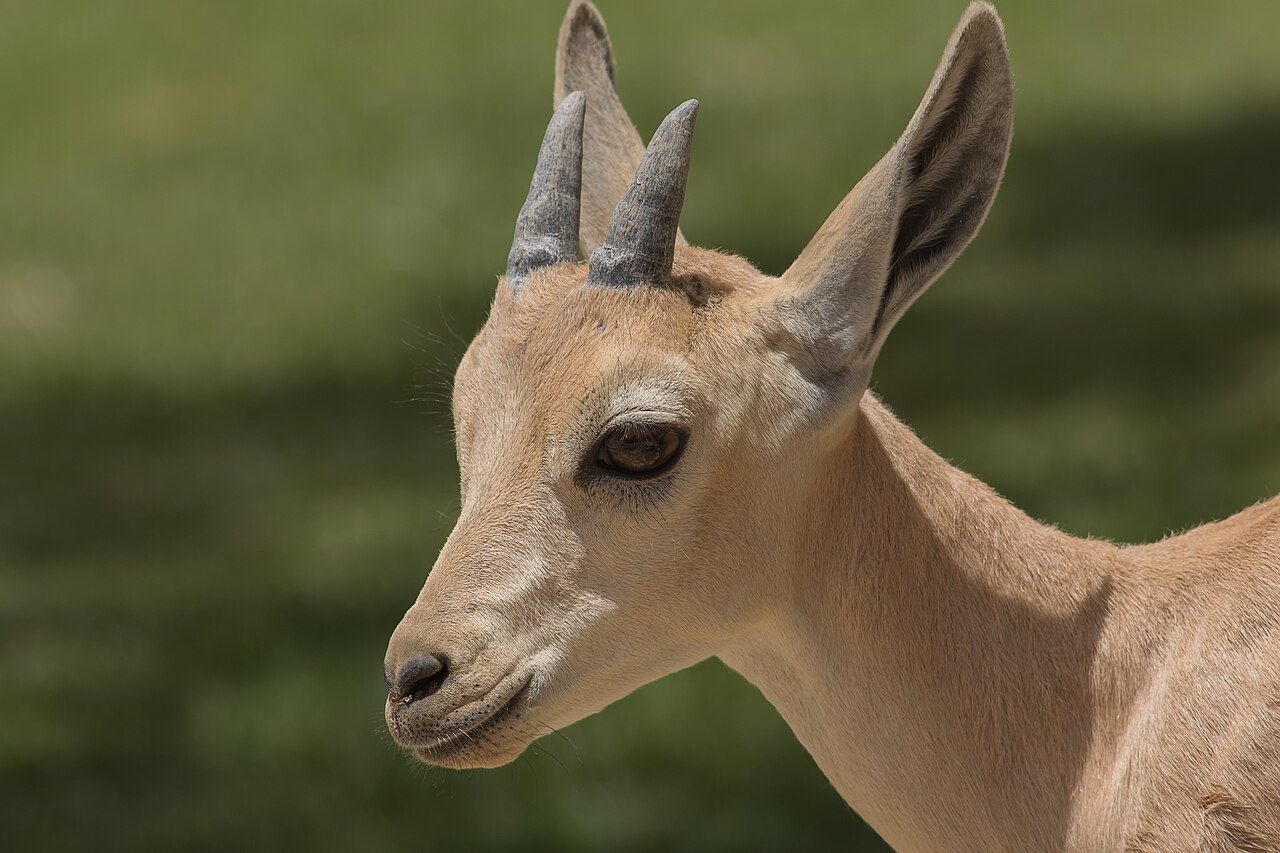
A short drive north, the dry plateau splits open into the gorge of Nahal Zin. At Ein Avdat, springs feed a series of pools at the bottom of a narrow white canyon, with poplar trees, reeds and a waterfall when the flow is strong. Ibex climb the walls, and birds of prey ride the air above.
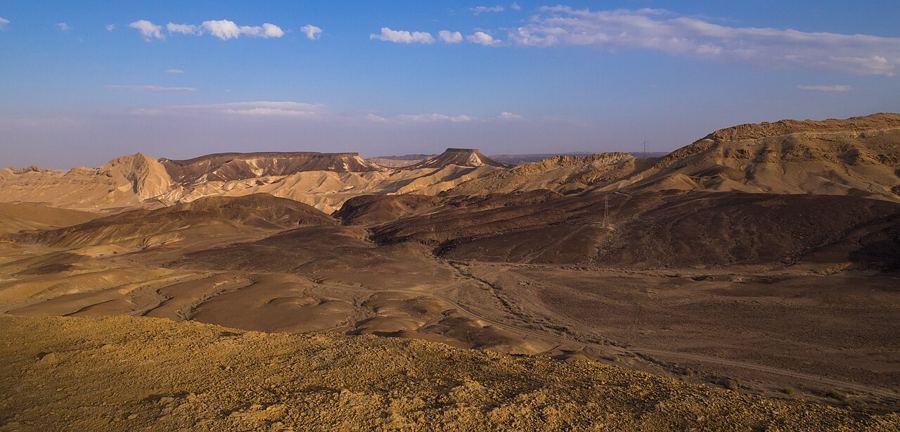 Another day · NegevMitzpe Ramon and the Ramon Crater
There are two ways in. From the lower parking area, an easy path leads along the stream to the pools and the waterfall and back. The full route continues upward, climbing steep steps and ladders fixed to the rock to reach the upper rim of the canyon. It is one way only, so you need a plan to get back to the car, either a second vehicle or a return walk along the top. Swimming in the pools is not allowed, both for the sake of the spring and because of the risk of disease from still water.
The trail is open from morning until mid-afternoon, with entry stopping earlier than the closing time. In heat and on busy days, rangers can limit access. Wear shoes with good grip; the rock near the water is smooth.
Sde Boker and the desert home
Just north of the canyon lies Sde Boker, a kibbutz founded in 1952. David Ben-Gurion, Israel's first prime minister, joined it after stepping down from office, and his simple wooden house there is kept as it was, with his books and papers. A few kilometres south, at Midreshet Ben-Gurion, he and his wife Paula are buried on a quiet ledge above the Zin canyon.
The view from the graves is one of the best in the Negev: a long sweep of eroded cliffs, the white gorge of Ein Avdat far below, and the bare hills fading into haze. Ibex often wander through the gardens nearby, used to people but still wild animals; keep back and do not feed them.
Heat and water in the central Negev
The central Negev plateau is high, which keeps winter nights cold, but summer days are very hot and almost shadeless. The usual desert rules apply:
- Carry at least two to three litres of water each for the canyon walk, more on the hill at Avdat in warm weather.
- Start by eight in the morning, and aim to finish walking by noon from May to October.
- A hat, sunscreen and long sleeves protect better than any amount of shade-seeking.
- In winter, watch the forecast. Flash floods can fill a canyon in minutes from rain falling miles away, and trails close when they threaten.
Mobile coverage is usually fine on the main road but can drop inside the canyon. Spring, from February to April, is the kindest season: days are mild, the canyon is green, and after a wet winter the slopes may carry a thin wash of wildflowers.
A desert road day
A sensible order is the canyon first, while it is cool and quiet, then Ben-Gurion's grave for the view, then Avdat on its hill before the afternoon sun hits. Or reverse the last two if you prefer the ruins in morning light. Either way, the three stops fit easily in a day from Beersheba, with time to continue south to Mitzpe Ramon and the crater for sunset.
Buses along Route 40 stop near Sde Boker and Avdat's junction, but a car makes the day far easier. If you are making a longer trip down the Negev, consider pairing this with Timna Park near Eilat, or with the great hilltop fortress of Masada to the east. A national parks pass covering several sites can be worth it; the terms change, so check before you go.