
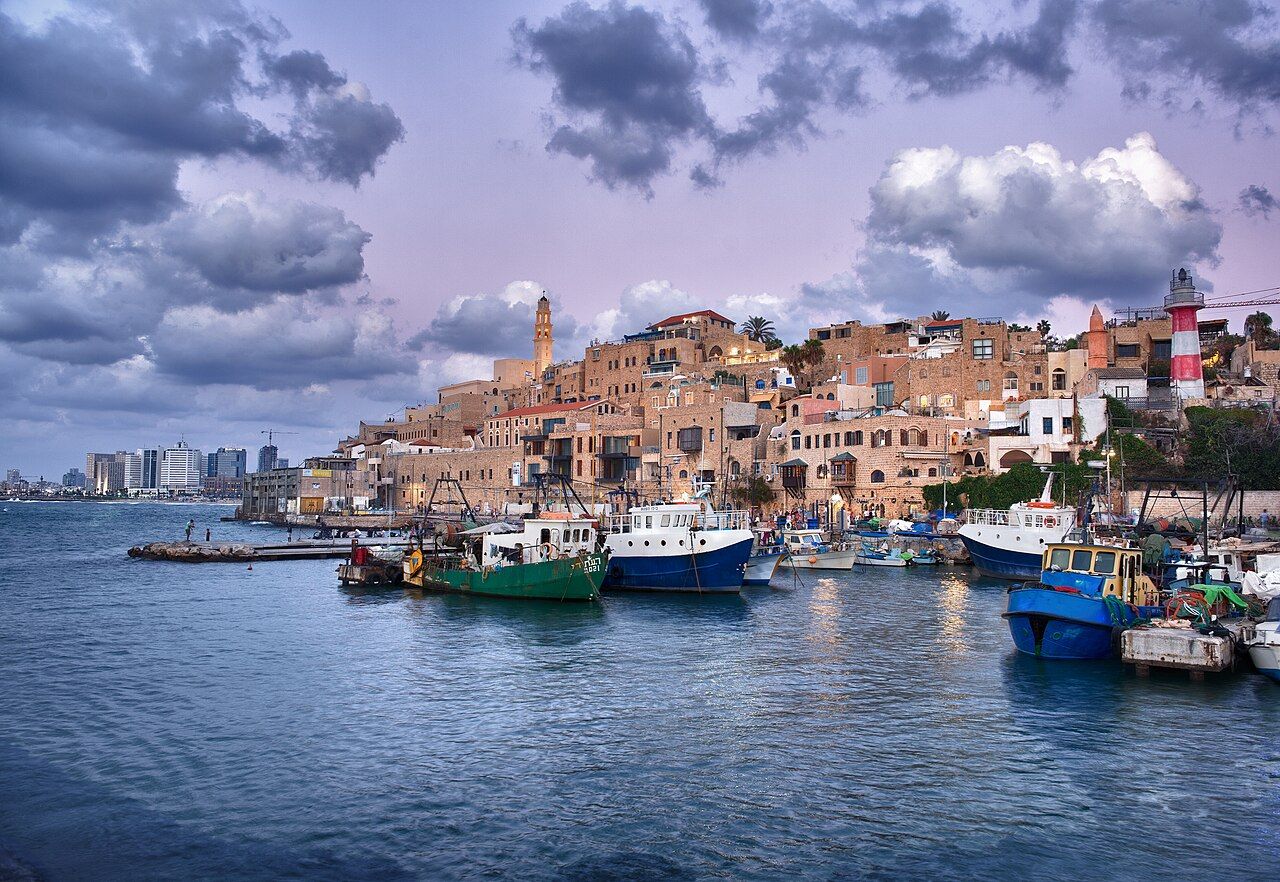
Jaffa sits on a rocky hill above the Mediterranean, just south of Tel Aviv's long beach. It has been a port for thousands of years, mentioned in ancient Egyptian records, in the Bible and in the accounts of crusaders and pilgrims who landed here on their way to Jerusalem. Today the city of Tel Aviv-Yafo includes it, and its population includes both Jews and Arabs, Muslims and Christians.
The old core on the hill, known as Old Jaffa, has been restored as a district of stone alleys, galleries and viewpoints. Around it lie the market streets and, below, the working harbour. An afternoon here, ending with sunset over the sea, is one of the easiest pleasures on the coast.
The clock tower
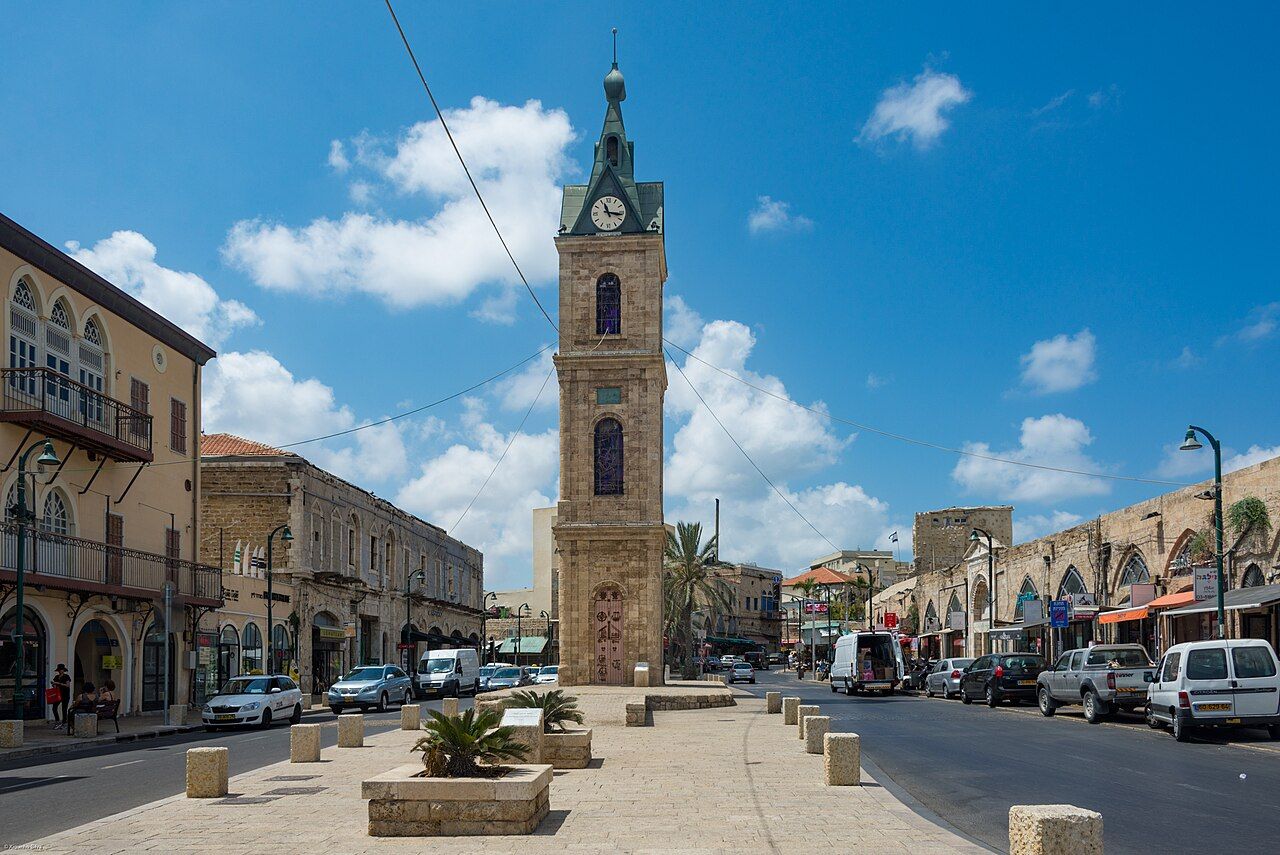
Start at the clock tower on Yefet Street, at the edge of the old city. It was built in the early twentieth century under Ottoman rule, one of several clock towers raised across the empire to mark the jubilee of Sultan Abdul Hamid II. Its pale stone shaft and stained-glass windows stand in a small square that once marked the entrance to the old town.
Nearby is the Mahmoudiya Mosque, built in the early nineteenth century, whose minaret you can see over the walls. Visitors may be able to see its courtyard from outside, but it is a working mosque, so respect prayer times and dress modestly if you go closer.
The flea market lanes
South-east of the clock tower lies the flea market, a grid of lanes known in Hebrew as the Shuk HaPishpeshim. Some shops sell antiques, carpets, brass lamps and old furniture; others sell vintage clothing, ceramics and design objects, and the area has many cafes and bars. On weekdays, dealers spread goods across the pavements, and haggling is normal.
The market is busiest on Friday mornings and quiet on Saturdays. In the evenings, especially in summer, the lanes take on a different life as restaurants and bars fill and music spills out. Prices vary widely; look carefully before buying anything sold as an antique.
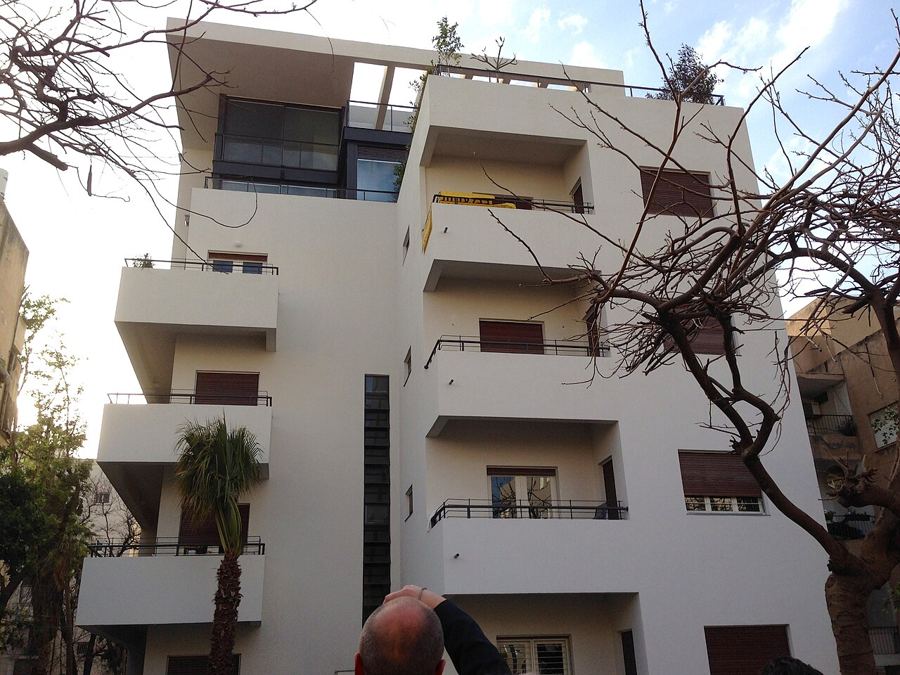 Another day · CoastWhite walls, curved balconies, then the sea
The hill and St Peter's Church
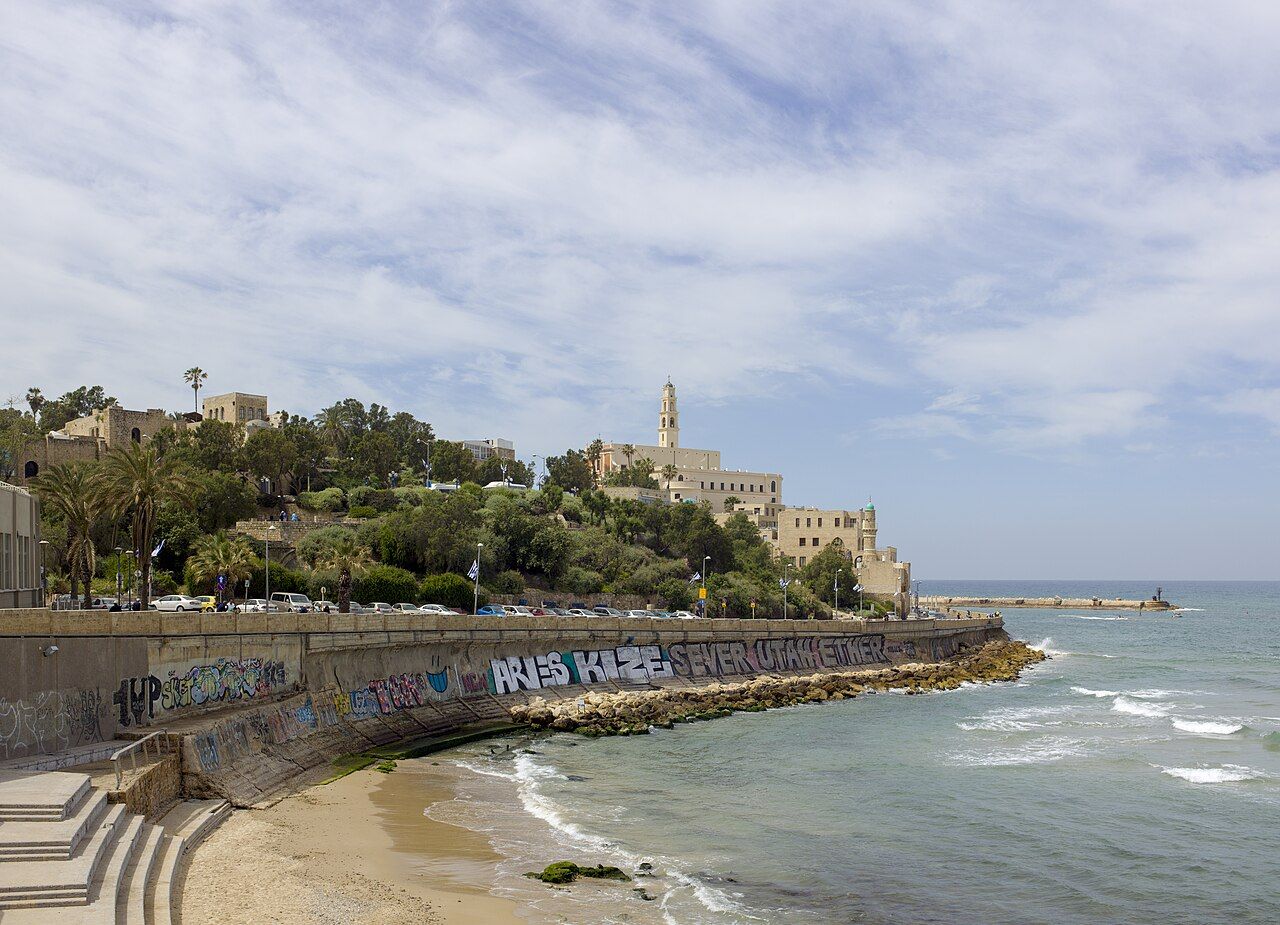
Climb from the clock tower up toward Kedumim Square, the main square of Old Jaffa. The large church that dominates the hill is St Peter's, a Franciscan church built in the late nineteenth century on the site of earlier churches, including a crusader-era citadel. Its bell tower is a landmark visible from much of the Tel Aviv shoreline. Christian tradition links Jaffa with the apostle Peter, who, in the Acts of the Apostles, raised a woman named Tabitha here and stayed in the house of Simon the Tanner.
Inside, the church is bright, with painted walls, a carved wooden pulpit and stained-glass windows showing scenes from the lives of saints. Masses are held in several languages for the city's Christian communities and for migrant workers, a reminder that it is a parish church as well as a landmark.
The church is open to visitors at set times; dress modestly, with shoulders and knees covered. From the terrace outside you look north along the curve of the bay toward the towers of Tel Aviv.
Behind the square, a maze of stone alleys winds down the hill. Many are named after signs of the zodiac. Artists' studios and galleries occupy restored houses. A small park at the top of the hill holds excavations and a viewpoint, and a footbridge known as the Wishing Bridge carries the zodiac theme on its railings.
The old port
Steps lead down from the hill to the port. Jaffa was the main harbour for pilgrims and goods bound for Jerusalem for centuries, but it was too shallow and rocky for large modern ships and lost its role to newer ports in the twentieth century. Fishing boats still tie up here, and old warehouses along the quay now hold galleries, a theatre and places to eat.
Offshore, just beyond the harbour, a cluster of rocks is linked in Greek legend with Andromeda, who was chained there before being rescued by Perseus. The biblical Jonah is also said to have set sail from Jaffa before he was swallowed by the great fish.
Sunset over the sea
Jaffa faces west, so the sun sets straight into the Mediterranean in front of you. Good places to watch are the breakwater by the port, the grassy slope of the park on the hill, and the promenade that runs north toward Tel Aviv. Arrive half an hour before sunset to find a spot, and bring a light jacket in the cooler months, as the wind off the sea picks up quickly once the light goes.
After dark, the walk back to central Tel Aviv along the promenade takes about an hour, with the lights of the shoreline ahead of you. Combine it with a morning on the boulevards of the White City for a full day on the coast. For more coast, the Roman harbour city of Caesarea lies an hour's drive north.
Practical points
Jaffa is hilly, with stepped stone alleys that are slippery after rain, so wear shoes with grip. Shade is limited on the hill and at the port, so carry water in summer. Public toilets are available near the port and the main square. Buses run from central Tel Aviv along Jerusalem Boulevard, though most stop on Shabbat.
As anywhere, check your own government's current travel advice before you go, and follow any instructions from police or local staff.