
Eilat sits at the very southern tip of Israel, on a short stretch of shore at the head of the Gulf of Aqaba. Jordan lies a few kilometres to the east and Egypt just to the west. Around the town the desert is fierce and colourful, with granite and sandstone mountains in red, purple and black. Off the beach, the warm, clear water of the Red Sea holds one of the most northerly coral reefs in the world.
A good day here does both: the desert at Timna in the cool early hours, the reef in the heat of the afternoon. The two are less than half an hour apart by road.
Timna Park
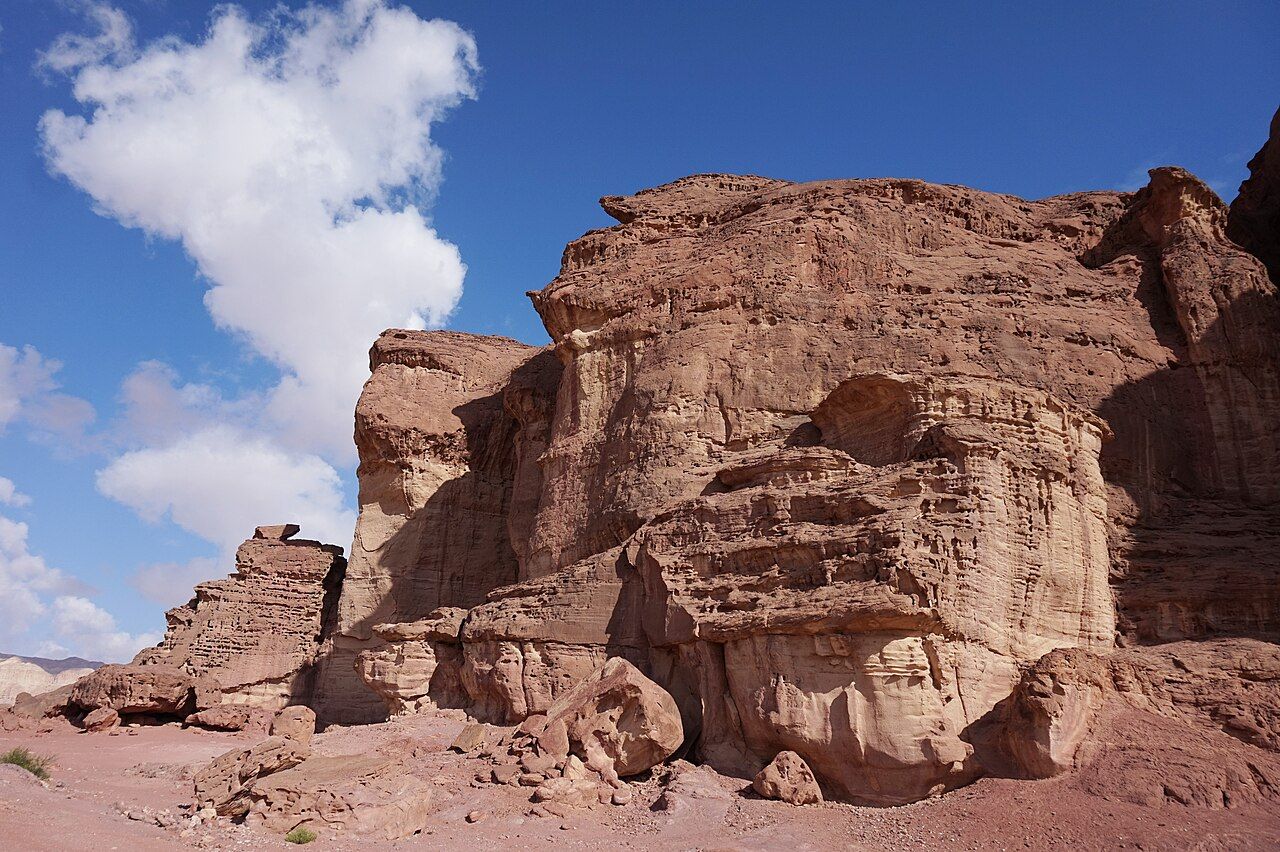
Timna Park covers a wide valley about twenty-five kilometres north of Eilat, ringed by cliffs. It is one of the oldest copper mining areas in the world. People were extracting and smelting copper here as early as the fifth millennium BCE, and mining reached peaks under Egyptian rule in the late Bronze Age and again in the early Iron Age. Hundreds of mine shafts, smelting sites and slag heaps remain scattered across the valley.
The park also shows off the shapes that wind and water carve in soft sandstone. Signposted roads lead to the main sights, each with short walks, so you can cover a lot by car and on foot in a morning.
- Solomon's Pillars. Huge columns of red sandstone eroded out of the cliff face. The name is a modern one; the mines have no proven link to King Solomon. At the foot of the pillars are the remains of a small Egyptian shrine to the goddess Hathor, from the time of the Egyptian mining expeditions.
- The Mushroom. A single rock balanced on a slim stem of softer stone, worn away by wind and sand.
- The Arches. Natural rock arches reached by a short, steep trail with some scrambling.
- Ancient mines. Shafts and galleries cut into the rock, some with handholds and footholds still visible.
Rock art carved in Timna shows chariots, hunters and animals. Look closely at the cliffs near the Hathor shrine and along the marked paths.
Excavations at Timna continue, and some of the smelting camps on the valley floor have yielded remains that help date the mining to particular periods. Stay on the marked paths and leave stones and slag where they lie; the whole valley is part of the archaeological record.
Heat in the southern Arava
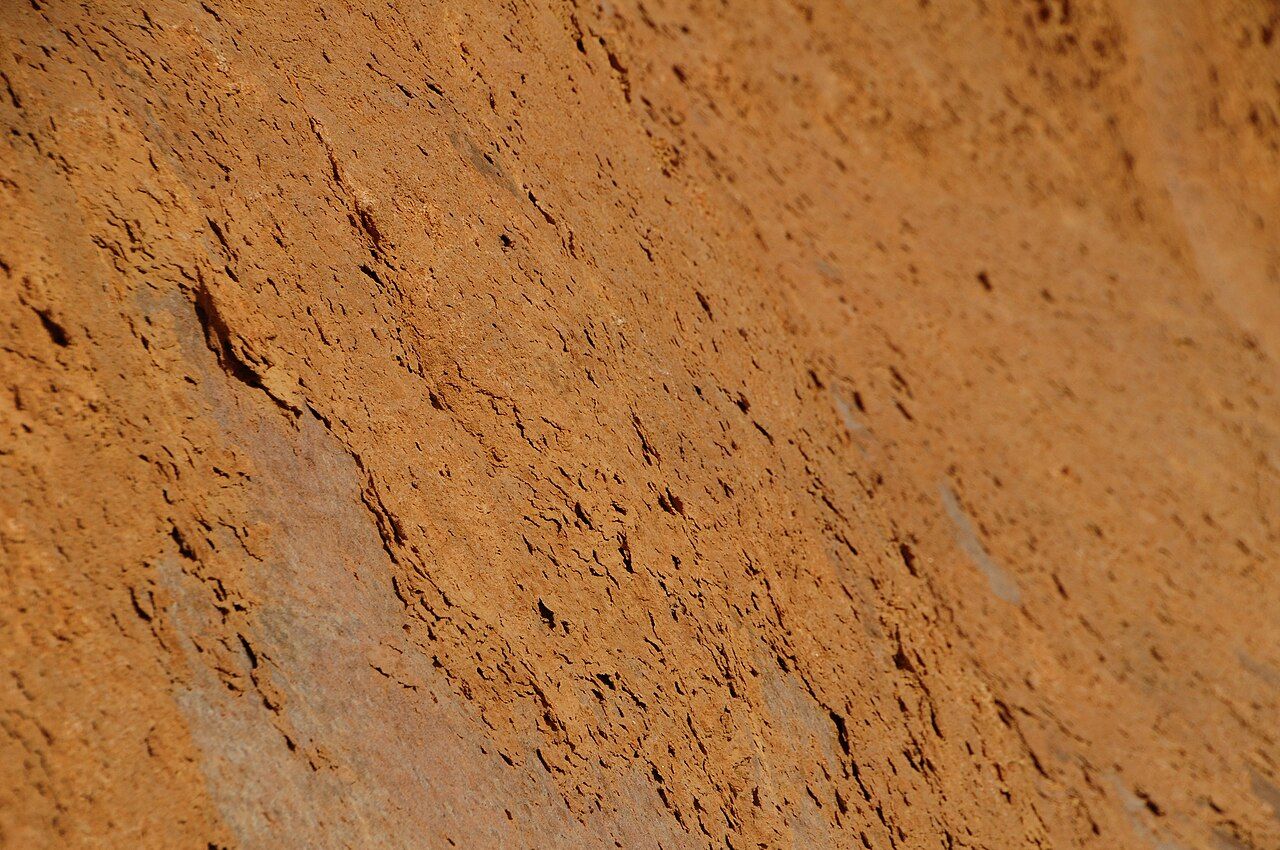
Eilat and Timna are among the hottest places in Israel. Summer days often climb well above forty degrees, and the sun is fierce even in spring and autumn. Timna has little shade, and its rock throws heat back at you long after midday.
Arrive at opening time, carry plenty of water, and plan to leave the desert by late morning in warm months. Wear a broad hat, loose long sleeves and closed shoes; the trails are rocky and some include scrambles. Park rules can close trails in extreme heat, and opening times and entry fees change, so check before you go. From October to April the days are warm rather than dangerous, which is why the winter months are the best season.
 Another day · NegevMitzpe Ramon and the Ramon Crater
The Coral Beach reserve
South of town, along the road towards the Egyptian border, the Coral Beach Nature Reserve protects a stretch of fringing reef that begins just off the sand. A short walk across a jetty takes you to the reef's outer edge, where the coral drops away into deep blue water. Hard corals form walls and heads, soft corals sway in the current, and the fish are everywhere: parrotfish, butterflyfish, damselfish, wrasse, and occasionally a turtle or a ray.
Entry is through the reserve, which has changing rooms and showers, and the snorkelling route is marked by floats. Rules are there to protect a fragile reef. Do not stand on the coral or touch it, even with fins. Enter and leave the water only by the jetties or marked paths. Do not feed the fish or collect anything, living or dead. Use sunscreen that does not harm reefs, or better, cover up with a rash vest.
The water is warm for much of the year and calm on most days. Even so, there can be currents along the reef edge, and boats pass farther out. Snorkel with a partner, stay inside the marked areas, and be honest with yourself about your swimming.
Other ways to see the reef
Elsewhere along the coast, Eilat has an underwater observatory with a tower you can walk down to watch the reef at depth, and several dive centres run introductory dives with instructors. Those are good options for anyone who prefers not to snorkel. Ask about any certification a dive needs, and remember that you should not fly within the day or so after scuba diving.
The town itself is a busy resort, crowded in Israeli school holidays and on weekends, with a long promenade by the water. Eilat is also a duty-free zone, which makes some things cheaper than elsewhere in the country. The beaches north of the reserve, close to the hotels, are sandier and busier, and better suited to a simple swim than to watching fish.
Getting there and the shape of the day
Eilat has an airport north of the town and long-distance buses from Tel Aviv, Jerusalem and Beersheba. By car, the drive from the centre of the country takes four to five hours down Route 90 through the Arava or Route 40 through the Negev. Driving south through the desert, it makes sense to break the journey at Mitzpe Ramon or at Avdat. More on the network is in getting around Israel.
For a single day: Timna at opening time, two or three of the sights there by late morning, back to Eilat for lunch and a rest in the shade, then the reef from mid-afternoon. In winter you can reverse it. The water is calm and the light soft late in the day, and when the sun goes down behind the mountains to the west, the Jordanian hills across the gulf glow red.