
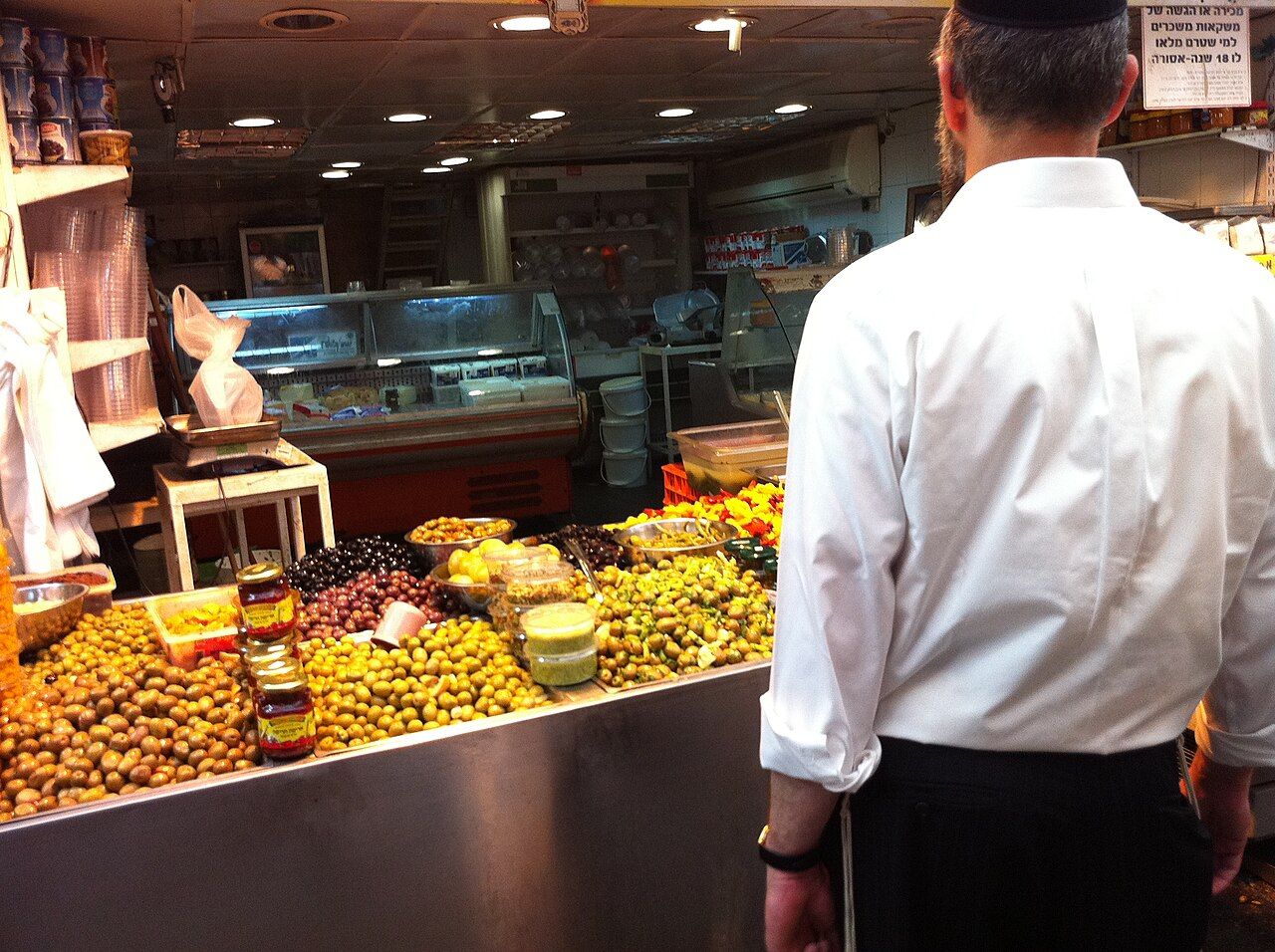
Mahane Yehuda is where Jerusalem shops for food. Known locally as the shuk, it fills a block between Jaffa Road and Agrippas Street with fruit and vegetables, spices, olives, cheeses, fish, bread, pastries and sweets, as well as small cafes and bars that have opened among the stalls in recent years. Next to it lies Nachlaot, a cluster of small neighbourhoods built in the late nineteenth and early twentieth centuries, where narrow lanes open onto courtyards and tiny synagogues. Together they make a relaxed half day in the new city, a short ride from the Old City.
Finding your way into the shuk
The market has two main parts. The open-air street, Mahane Yehuda Street itself, runs parallel to a covered alley with a roof of metal and plastic. Between them, smaller lanes named after fruits and trees connect the two, and the whole grid fills with noise, smells and handcarts from early morning. On the far side, a separate section built around an old courtyard is known as the Iraqi market, where older men often sit over games of backgammon.
A weekday mid-morning is the most comfortable time to visit. The stalls are full, the crowds manageable, and traders more willing to let you taste before you buy. Halva in dozens of flavours, dried fruit, fresh herbs, and flatbreads still warm from the oven are easy to eat as you walk. Many traders accept cards, but small purchases go faster with cash.
Olive counters are a good place to start. Green and black olives, cured in brine, oil or spices, sit in steel trays beside pickled peppers, lemons and turnips, and most traders will scoop a few into a paper cone for you to try. Further along, spice merchants pile ground turmeric, sumac and paprika into tall cones, and tea blends fill sacks by the door. Prices are set by weight, and asking is normal.
The Friday rush
On Friday the market changes character. From early in the morning, Jerusalemites come to shop for the Shabbat meals, and by late morning the alleys are shoulder to shoulder. Traders call out prices and cut them as closing time nears; bakeries sell braided challah loaves by the stack. It is loud, crowded and exhilarating, but hard going with a pushchair or a large bag.
By mid-afternoon on Friday the shutters come down and the market falls silent until Saturday night. Exact closing times shift through the year with sunset, so plan to arrive well before. If you want the atmosphere without the crush, come on Thursday, when many families also do their shopping.
In the evenings, particularly from Sunday to Thursday, some stalls close and bars and small restaurants open inside the market. The mood is younger and the music louder, and shutters painted with portraits by a street artist become visible once the stalls are closed.
Nachlaot's courtyards
Across Agrippas Street, to the south, lies Nachlaot. It began in the 1870s and after as one of the first groups of neighbourhoods built outside the Old City walls, each founded by a different community of Jews, from Kurdistan, Iraq, Persia, Syria, Yemen, Morocco and elsewhere. Houses were built around shared courtyards, close together, with lanes too narrow for cars.
Walking here is a matter of getting pleasantly lost. Iron gates open onto courtyards with laundry lines, potted plants and old stone steps. Doors are painted blue and green, mezuzahs mark the doorframes, and murals appear on blank walls. Remember that this is a residential neighbourhood: keep your voice down, do not walk into private courtyards uninvited, and ask before photographing people.
 Another day · JerusalemInto the water beneath the ridge
Synagogues on every corner
Nachlaot is said to hold more than a hundred synagogues, most of them small, many no larger than a living room. Each community built its own, following its own traditions of prayer and music. Some occupy a single room in a courtyard; others are larger, with painted ceilings or carved arks. Many are open only at prayer times.
If a door stands open and you are curious, you may be welcome to look in quietly. Men should cover their heads, and everyone should dress modestly, with shoulders and knees covered. Do not enter during services unless invited, and never photograph on Shabbat.
A different kind of market
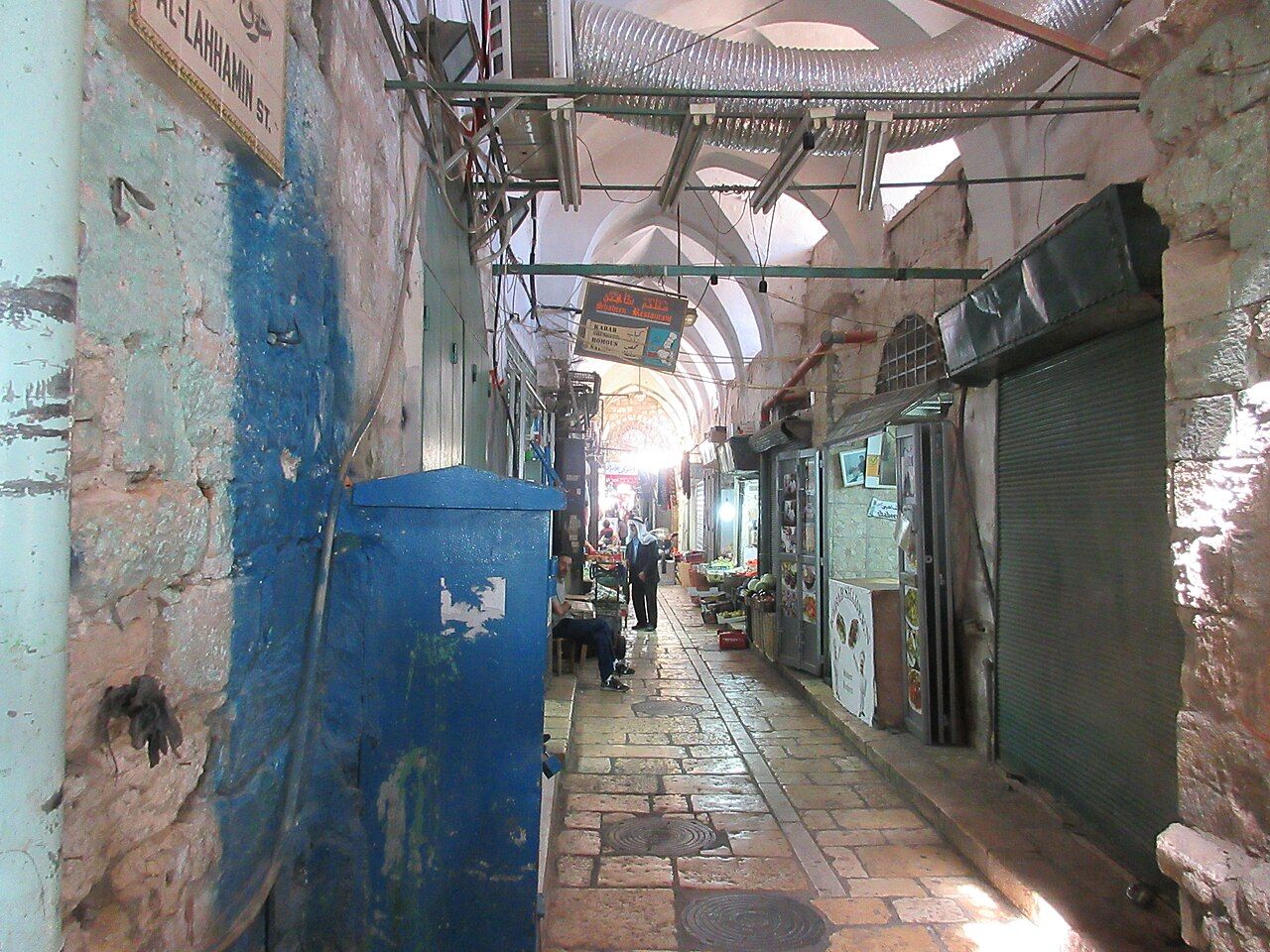
Mahane Yehuda is a modern Jewish market of the new city, but it is not Jerusalem's only one. Inside the Old City walls, the covered lanes of the Muslim and Christian quarters hold older souqs, among them a vaulted butchers' market whose stone arches date back centuries. They are worth seeing on the same day if you want to compare, and the guide to the Old City quarters explains how to fit them in.
From the market, Jaffa Road leads east toward the city centre and the Old City walls, about half an hour on foot or a few stops on the light rail.
Practical points
The light rail Red Line stops on Jaffa Road right by the market, and many buses run along Agrippas Street. Toilets are limited inside the market itself. The lanes of Nachlaot are stepped and uneven in places, so wear comfortable shoes.
Pickpockets work crowded markets everywhere, and this one is no exception on a busy Friday; keep your bag closed and in front of you. If you plan your week around the market, read the guide to Shabbat and holidays to see how the weekend affects shops and transport across the country. For a longer day, pair the market with a morning at the Israel Museum, a short bus ride away.